
Solution • AI assistants
AI Assistants for Business Data Engineered for Scale
Enterprise organizations sit atop oceans of proprietary intelligence: product specifications, legal contracts, engineering runbooks, standard operating procedures, and customer support tickets. Yet knowledge workers waste nearly twenty percent of their workweek hunting down accurate answers across scattered SharePoint drives, Google Docs, Confluence spaces, and archived email threads. We design and deploy enterprise-grade AI assistants that ingest, index, and query your internal documents with strict role-based access control, cryptographic data tenancy, and deterministic citations that link every generated response directly back to verbatim source paragraphs. By coupling hybrid semantic vector search with rigorous ground-truth evaluation pipelines, our architectures eliminate generative hallucination, provide visible cost-per-query telemetry, and ensure company data never leaks into public model training datasets.
Best for growing enterprises in India, the USA, UK, Australia and Canada where support agents, engineers, legal teams, or operations staff repeatedly search extensive internal documentation or draft recurring communications where precision, verifiable source grounding, and role-based permissions are mandatory.
Deliverable: Production RAG architecture, vector database index, evaluation benchmark harness, and web UI • Evaluation pilot in 2 to 3 weeks; production deployment in 6 to 8 weeks

Executive Brief
How Is This Solution Architected, What Impact Does It Deliver, and Who Owns It?
Engineering boundaries, verified commercial payback, and operational governance models established before writing production code.
Architectural Approach
We build enterprise retrieval-augmented generation systems using hybrid dense-and-sparse retrieval architectures. Inbound user queries undergo contextual query rewriting, hybrid semantic search across vector embeddings and BM25 keyword indices, and reciprocal-rank fusion reranking. Retrieved context chunks are evaluated against strict relevance and hallucination guardrails before injection into modern reasoning LLM context windows, guaranteeing that every generated answer is mathematically anchored to authoritative source documents. Vector indices are partitioned by cryptographic organizational metadata.
Measured Economic Impact
Organizations implementing our internal enterprise assistants experience a sixty to seventy-five percent decrease in internal technical support tickets, rapid customer query turnaround, and an average savings of four to six operational hours per knowledge worker weekly. New employee onboarding time drops by fifty percent as institutional knowledge becomes instantly accessible, while legal and compliance review cycles accelerate threefold without compromising accuracy. The financial payback is realized through measurable labor productivity gains.
Governance & IP Custody
Zero customer data is ever transmitted to public model training pipelines; all inference runs through dedicated private VPC endpoints or self-hosted open-weights models (Llama, Mistral) under strict data protection agreements. Role-based document permissions are mirrored from your corporate identity provider (Okta, Azure AD), ensuring staff can only query information their security clearance permits. Complete query telemetry and evaluation drift logs are retained for enterprise compliance audits. All model interactions, token consumption metrics, and retrieval latency distributions are mirrored to central security information and event management systems, providing real-time alerting on anomalous query patterns, potential prompt injection attempts, or unauthorized information access attempts.
System Architecture
What Does the Solution Include and How Does Data Flow?
Modular engineering components designed for decoupled resilience, transactional integrity, and zero data leakage.
Architecture Blueprint
Production System Component Overview
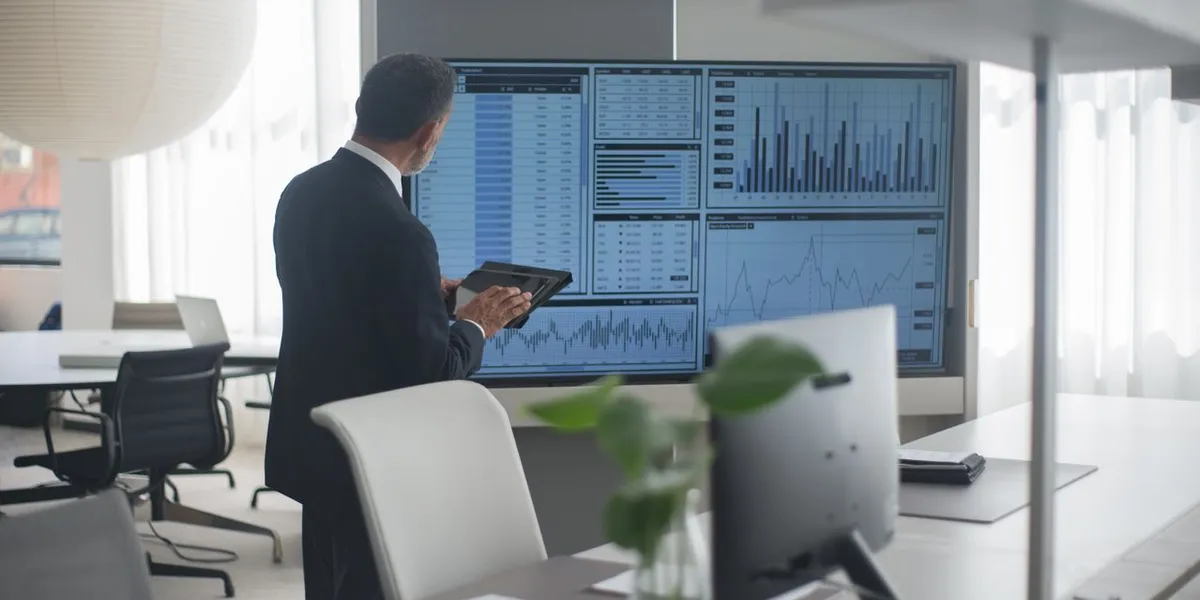
Document Ingestion & Chunking Pipeline
Extracts text, tabular structures, and metadata from PDFs, DOCX, Markdown, and intranet repositories with semantic layout analysis and hierarchical chunking.
Technical Context
Our ingestion workers execute hierarchical semantic chunking that preserves parent-child document context. Rather than blindly slicing documents at arbitrary character counts, the pipeline recognizes chapter headings, sub-clauses, tables, and lists. Tabular data is converted into clean Markdown representations, and visual layout engines preserve header associations across complex multi-page PDF documents.
Hybrid Vector & Keyword Indexing Layer
Generates high-dimensional dense embeddings and sparse BM25 indices stored across vector databases with tenant and document-level access filter partitions.
Technical Context
By pairing dense neural embeddings with sparse BM25 keyword indices, our search layer captures both high-level semantic intent and exact alphanumeric token matches (such as product part numbers, error codes, and legal clause numbers). Reciprocal Rank Fusion (RRF) algorithms merge candidate lists dynamically, delivering superior retrieval recall compared to vector-only architectures.
Retrieval Reranking & Guardrail Engine
Applies cross-encoder neural reranking to candidate chunks, evaluates contextual sufficiency, and enforces strict toxicity and prompt injection guardrails.
Technical Context
The cross-encoder reranker scores the top fifty retrieved chunks against the user query, filtering out irrelevant semantic noise and selecting only the top three to five highest-relevance passages. Guardrail verifiers inspect the inbound query for adversarial prompt injection attempts, isolating external document content in sandboxed boundaries.
Inference & Citation Generation Gateway
Coordinates reasoning LLM calls, streaming markdown responses with clickable footnote links referencing verbatim source page passages.
Technical Context
The generation gateway streams tokens to user interfaces via Server-Sent Events (SSE), keeping time-to-first-token under eight hundred milliseconds. The engine post-processes the output stream in real time, mapping citation brackets to exact source document IDs, page numbers, and bounding-box coordinates for instant side-drawer inspection.
Results
What This Solution Delivers
Outcome 01
Verifiable answers grounded with clickable source citations
Staff receive accurate answers in seconds, with every paragraph accompanied by direct links to underlying manuals, policies, or contracts for immediate verification and zero guesswork.

Outcome 02
Role-based document access controls mirroring corporate SSO
Security permissions match your corporate identity directory, ensuring employees only retrieve documents and data corresponding to their authenticated clearance level.

Outcome 03
Deterministic cost and accuracy telemetry logged per interaction
Comprehensive evaluation dashboards log every query, retrieval score, latency metric, and dollar cost, proving ongoing ROI while maintaining complete financial oversight.
Methodology
How Long Does Delivery Take and What Happens at Each Stage?
Structured delivery milestones with transparent verification gates to eliminate operational and financial risk.
Phase 1: Knowledge Corpus Audit & Ground-Truth Test Harness
- Corpus categorization across document formats, update cadences, and permission schemas
- Creation of fifty to one hundred gold-standard question-answer evaluation pairs with source citations
- Automated RAG benchmark framework measuring retrieval recall, precision, and faithfulness
- Data privacy review and enterprise compliance alignment documentation
Verification Gate
Client stakeholders validate evaluation dataset accuracy and agree on minimum acceptance thresholds.
Phase 2: Ingestion Architecture & Hybrid Index Deployment
- Automated document ingestion pipeline with layout-aware PDF parsers and PII scrubbing
- Deployment of Qdrant or Pinecone vector database with hybrid BM25 and dense embedding indices
- Automated delta-sync workers capturing document edits, additions, and deletions in real time
- Identity directory synchronization mapping document access control lists
Verification Gate
Retrieval pipeline demonstrates greater than ninety percent recall on the gold-standard test harness.
Phase 3: Guardrail Architecture & Citation User Experience
- Cross-encoder reranker integration and anti-hallucination fact-checking middleware
- Enterprise web UI with conversational threads, source document preview drawers, and copy tools
- Integration with corporate SSO (Okta, Azure AD) with dynamic ACL role propagation
- Slack and Microsoft Teams conversational bot integration deployment
Verification Gate
Zero unauthorized document disclosures recorded during adversarial security red-team audits.
Phase 4: Pilot Department Launch, Telemetry & Handover
- Controlled pilot rollout to initial target department (support, operations, or legal)
- Real-time Grafana telemetry tracking query volume, latency, cost per answer, and user feedback
- Comprehensive engineering runbooks, documentation, and model fine-tuning playbooks
- Administrator training sessions and complete codebase and infrastructure handover
Verification Gate
Greater than eighty-five percent positive user satisfaction ratings across two weeks of live queries.
Risk Engineering
What Can Go Wrong and How Do You Prevent It?
Real-world architectural risks, failure symptoms, and deterministic technical safeguards built into our solutions.
Generative Hallucination on Unseen Edge Case Queries
Risk Without Proper Architecture
Naive AI chatbots generate confident, fabricated technical instructions or regulatory guidance that deceive staff, introduce severe business liability, and destroy user confidence.
Our Engineering Mitigation
Dual-layer contextual verification where the system measures factual overlap between generated answers and retrieved text, refusing to answer and escalating to humans when confidence falls below predefined thresholds.
Privilege Escalation & Unauthorized Document Exposure
Risk Without Proper Architecture
Junior employees query the AI assistant to uncover confidential executive compensation, board minutes, or pending merger documents stored on internal drives.
Our Engineering Mitigation
Pre-retrieval identity filtering directly within the vector database layer, enforcing ACL metadata tags derived from Azure AD / Okta so unauthorized documents are mathematically invisible to the index.
Runaway Token Consumption and Uncontrolled API Costs
Risk Without Proper Architecture
Unconstrained conversational memory and massive document injections cause monthly model inference bills to explode tenfold without warning or financial oversight.
Our Engineering Mitigation
Strict contextual window management, semantic caching of frequent queries, token budget quotas per department, and real-time cost-attribution telemetry dashboards.
Reliability Engineering
What Uptime, Support, and Disaster Recovery Do You Get?
Enterprise availability commitments, failover mechanics, and data protection boundaries backed by formal engineering agreements.
Availability Commitment
Ninety-nine point nine percent availability across semantic retrieval APIs, vector database clusters, and inference gateways.
Recovery Point Objective (RPO)
Zero RPO for ingested vector indices backed by automated point-in-time document database snapshots.
Recovery Time Objective (RTO)
Sub-ten-minute RTO with automated multi-node vector database replica failovers.
Incident Response SLA
Twenty-minute response SLA for enterprise assistant query degradation or retrieval anomalies.
Disaster Recovery Model
Encrypted cross-region vector index backups with automated restore runbooks.
Observability & Tracing
Continuous evaluation logging tracking token usage, hallucination scores, and latency percentiles.
Technology Stack
Stack & Enterprise Tools
Industry-standard technologies, platforms, and infrastructure frameworks deployed across this solution.
Compliance & Security Standards
Audited Regulatory & Data Protection Frameworks
Use Cases
Business Use Cases We Solve
Tier-One Technical & Customer Support Deflection
Support agents spend half their shift re-reading complex product manuals and release notes to answer customer inquiries. Our assistant drafts cited, accurate technical responses directly within support ticketing interfaces for human agent review and instant send, reducing customer wait times by seventy percent. Integrated confidence scoring ensures that ambiguous queries or multi-product configuration issues are automatically flagged with suggested escalation paths, empowering tier-one staff to resolve tier-two technical inquiries with complete accuracy.
Corporate Legal & Compliance Knowledge Retrieval
Legal teams spend hours manually cross-referencing vendor contracts, master service agreements, and regulatory guidelines. Our solution indexes thousands of agreements, providing instant clause comparisons, liability cap lookups, and verbatim citations in seconds, dramatically reducing contract review cycles. Attorneys and procurement leads can query across historical amendments, governing law jurisdictions, and termination covenants simultaneously, receiving side-by-side textual diffs that accelerate contract turnaround while ensuring zero compliance oversights.
Engineering Architecture Runbooks & Incident Triage
On-call software engineers scramble through disparate documentation during system incidents. We deploy an engineering assistant that ingests runbooks, architecture diagrams, and post-mortems, synthesizing immediate mitigation steps during high-severity outages to restore operational uptime. By cross-referencing live telemetry error codes against historical root-cause analyses and runbook procedures, the assistant isolates failing microservices and presents step-by-step remediation scripts directly within engineering incident channels.
Gallery
What Typical Deliverables Look Like
Sample deliverables from a typical engagement — yours follow the same shape, scoped to your business.

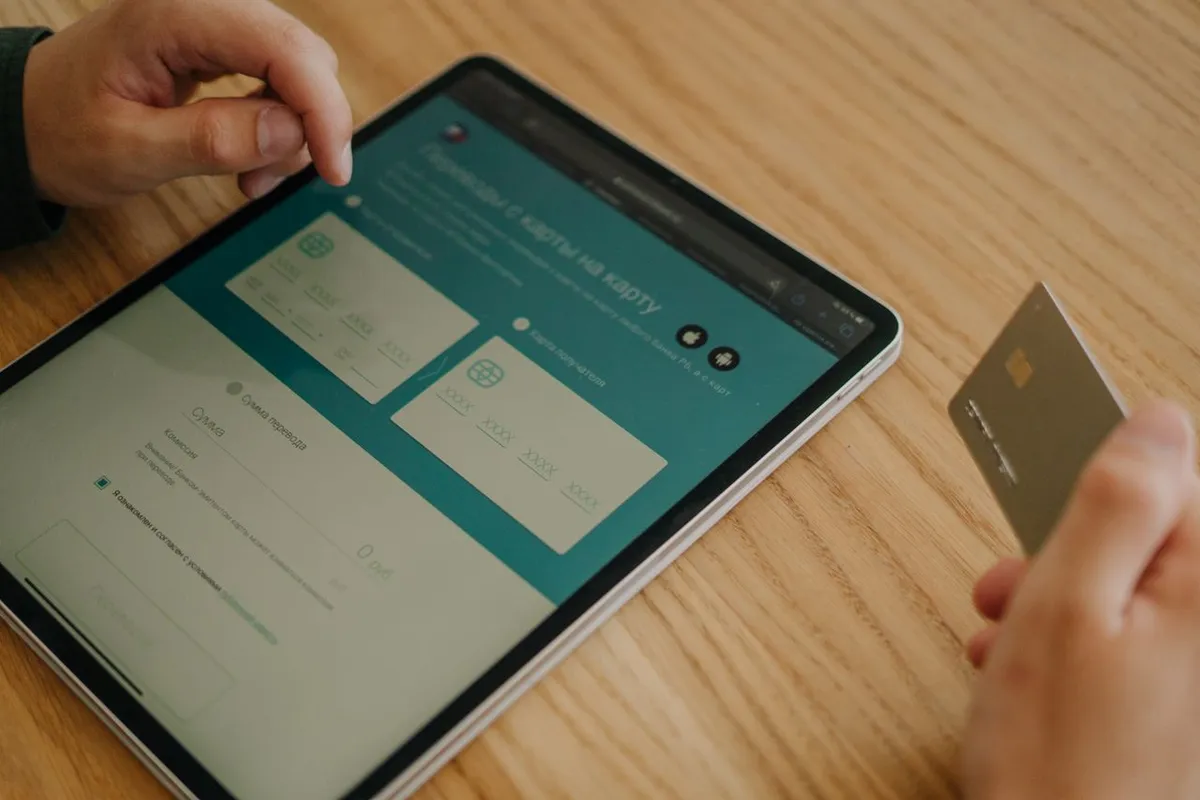
Visual 01
Hierarchical Document Index
Enterprise knowledge bases indexed with semantic vectors and granular identity ACL permissions.
Visual 02
Interactive Cited Response Interface
Clean conversational answers with clickable footnote references revealing exact source passages.
Visual 03
Real-Time Accuracy & Cost Telemetry
Continuous observability tracking retrieval recall, response latency, and inference expenses.
Pricing
What Drives the Cost of AI assistants?
- 1
Total document corpus volume, file format diversity (scanned PDFs, spreadsheets, CAD diagrams), and tabular parsing complexity. Extensive multi-column tables and OCR processing require specialized multimodal layout pipelines that influence ingestion indexing costs.
- 2
Granularity of role-based document access control (ACL) and directory synchronization. Mirroring complex enterprise security groups from Azure AD or Okta into vector partitions requires custom identity synchronization workers and frequent permission recalculations.
- 3
Expected query throughput and infrastructure topology selection between cloud API endpoints (Azure OpenAI, AWS Bedrock) versus private self-hosted GPU clusters (vLLM, Triton). Peak concurrent queries and caching efficiency determine ongoing compute budgets.
Indicative price models live on the pricing page — your fixed quote arrives with the discovery scope.
Fit Check
Is This Solution Right for Your Business?
When It Fits
Support agents, engineers, legal teams, or operations staff repeatedly search extensive internal documentation or draft recurring communications where precision, verifiable source grounding, and role-based permissions are mandatory.
When It Doesn't
You require autonomous generative agents to perform unreviewed write mutations on live banking or customer ledgers without human review, or lack ground-truth sample documents with clear factual answers.
Straight Talk
Mistakes We Prevent & How We Compare
Common Mistakes We Prevent
Deploying generic out-of-the-box chatbots on live company data without factual evaluation benchmarks
Ignoring document-level access permissions, leading to severe internal data security leaks
Failing to implement semantic caching and token budget throttles, resulting in runaway operational bills
Us vs the Usual Alternative
Provenance
AnyPlace: Clickable verbatim source citations with page numbers
Typical alternative: Unverifiable conversational claims with zero audit trail
Security
AnyPlace: SSO-linked document ACL filtering at vector database layer
Typical alternative: Global index exposing sensitive executive files to all users
Evaluation
AnyPlace: Empirical test suite measuring recall, precision and accuracy
Typical alternative: Subjective developer impressions without quantitative metrics
Data Privacy
AnyPlace: Zero-retention VPC architecture; never used for public training
Typical alternative: Consumer tools transmitting corporate IP to external servers
Worth knowing: McKinsey Global Institute research estimates that generative AI search and knowledge retrieval technologies can unlock between two point six and four point four trillion dollars in annual economic value across global enterprise workflows. Source: McKinsey Global Institute · Verified September 2026
Ecosystem
Services Inside This Solution
One cohesive engagement drawing on specialized engineering capabilities from our service hubs.



Cross-Solution Exploration
Explore Other Solutions

AI Workflow Automation
Repetitive reading, sorting and drafting handled by supervised AI — humans keep decisions and exceptions.
View solution →

Business Process Automation
Approvals, handoffs and data entry that run themselves — mapped first, automated where payback is clear.
View solution →

Legacy Modernization
Old systems renewed step by step — strangler-pattern migration with zero big-bang rewrites.
View solution →
Questions & Answers
Common Enterprise Questions
Transparent answers regarding implementation mechanics, data ownership, ongoing costs, and SLAs.
Is our proprietary business data used to train public language models?
Never. We architect enterprise solutions strictly utilizing dedicated, zero-data-retention private enterprise endpoints (such as Azure OpenAI, AWS Bedrock) or completely self-hosted, air-gapped open-weights models (such as Llama 3 or Mistral) running within your dedicated VPC. Legal data protection agreements guarantee your data is neither stored for training nor accessible to any third-party entity.
All customer data remains strictly within your enterprise security boundary. Models operate in stateless inference mode, processing context in memory during the query and flushing data immediately upon response completion, satisfying strict enterprise information security standards.
How do you prevent the AI assistant from fabricating answers or hallucinating?
We prevent hallucinations through strict Retrieval-Augmented Generation (RAG) constraints. The model is instructed through immutable system guardrails to formulate answers solely using context passages retrieved in that specific query window. Furthermore, our post-generation verification middleware checks the output against source texts, automatically declining to answer and flagging the query if factual overlap is insufficient.
Every generated claim is accompanied by clickable footnote citations linking directly to the underlying document source, complete with page numbers and exact paragraph highlights. Staff can verify source facts in a single click, eliminating reliance on unverified generative assertions.
How does the assistant honor our existing internal file access permissions?
When documents are ingested from SharePoint, Google Drive, or Confluence, their corresponding Access Control Lists (ACLs) are extracted and stored as cryptographic metadata within the vector index. When an employee logs in via Okta or Azure AD, their security group memberships filter the vector search query at the database level, making unauthorized documents mathematically inaccessible.
This pre-retrieval filtering guarantees that unauthorized records are never injected into the LLM context window in the first place. A junior staff member querying the system will receive answers solely grounded in documents they already have formal clearance to view in your existing file shares.
What ongoing operational costs should our organization expect for model inference?
Operational inference costs are transparent and predictable. For typical enterprise usage spanning thousands of monthly queries across hundreds of knowledge workers, API token costs typically range between one hundred and five hundred dollars monthly. We implement semantic caching to serve recurring questions instantly at zero inference cost, and provide per-department cost attribution telemetry.
During discovery, we model your expected query volumes, token counts, and update frequency, providing executive sponsors with a detailed total-cost-of-ownership projection before infrastructure is deployed.
Can the AI assistant extract information from complex data tables, PDFs, and scanned charts?
Yes. Standard text parsers frequently mangle tabular data into unintelligible character strings. We employ advanced multimodal visual document layout engines that parse complex multi-column PDFs, financial tables, and technical diagrams, converting them into structured Markdown tables and semantic descriptions before indexing.
When a user queries financial metrics, inventory counts, or technical tolerances embedded within tabular charts, the assistant parses the exact row and column intersections accurately, quoting verified tabular data rather than guessing.
How do we update documents when company policies or technical manuals change?
Our architecture includes automated delta-synchronization workers. When a document is modified, added, or deleted in your source repository, a webhook triggers immediate incremental re-indexing of only the affected passages within seconds, ensuring employees never receive outdated or deprecated guidance.
Historical versions of replaced documents can be archived or marked with temporal expiration flags, preventing legacy guidelines from contaminating current operational recommendations.
Can the assistant integrate directly into Slack, Microsoft Teams, or our customer support portal?
Yes. We build responsive web interfaces as well as native bot integrations for Microsoft Teams, Slack, Jira Service Management, Zendesk, and custom enterprise portals, allowing staff to interact with institutional knowledge within the workflows they already use daily.
Staff can mention the assistant bot in departmental channels to summarize discussions, pull relevant SOPs, or draft customer responses directly within collaborative team workspaces.
What is the typical timeline for deploying an enterprise AI assistant into production?
A functional evaluation pilot running over your representative sample documents with fifty benchmarked ground-truth tests is delivered within two to three weeks. Full enterprise production rollout, including SSO integration, automated synchronization pipelines, and administrative telemetry, typically completes in six to eight weeks.
This phased delivery model ensures that stakeholders validate retrieval accuracy and user satisfaction on empirical data before enterprise-wide scaling.
Content last reviewed September 2026.
TELL US ABOUT YOUR PROJECT
Tell Us What to Build, Fix or Modernize
Send a short brief. We reply within 12 hours with clarifying questions and a discovery quote — no retainers, no spam.
What Happens Next
Request a Discovery Quote
Share your goals and timeline. NDA signed first if needed.
12-hour response