
Dedicated Engineering Pods: Embedded Directly in Your Codebase
Senior engineering capacity without the four-month hiring cycle: full-stack developers embedded in your repo, attending your standups, and shipping reviewed PRs weekly.
Best for growing businesses in India, the USA, UK, Australia and Canada where you have an existing codebase and clear tasks, but your team lacks hands — and you want experienced developers who commit directly to your repo. Predictable monthly rate per developer or pod; zero recruiter fees; 30-day flexible cancellation terms.

Executive Brief
Strategic Context & Engineering Purpose
How our dedicated developer engagements de-risk operational transitions and produce enduring software assets.
Operational Challenge
Engineering leaders, CTOs, and high-growth technology founders frequently find themselves severely constrained by agonizing technical recruitment cycles, exorbitant domestic staffing agency placement fees (often exceeding twenty-five to thirty percent of first-year base salary), and multi-month onboarding delays. Traditional staff augmentation agencies routinely disappoint technical executives by practicing 'bait-and-switch' staffing—showcasing impressive senior resumes during initial sales negotiations only to assign inexperienced junior contractors who require constant technical supervision. These disconnected contractors introduce brittle architectural patterns, produce un-tested code, communicate poorly across dispersed time zones, and create severe technical debt that actively drains, rather than expands, core engineering velocity.
Architectural Approach
We provide dedicated, pre-vetted senior software engineering pods that embed seamlessly into your existing corporate engineering workflow, version control repositories, and team communication channels. Our engineers possess verified senior-level proficiency across modern TypeScript, React, Next.js, Node.js, Python, PostgreSQL, and cloud architecture (AWS, GCP, Azure). Operating directly inside your GitHub or GitLab organization, our pods adhere to your branch protection rules, linting configurations, pull request review disciplines, and continuous integration pipelines from day one. Every sprint features weekly live software demonstrations, transparent sprint burn-down tracking, and complete intellectual property assignment with zero contract buyout fees.
Measured Economic Impact
Embedding a dedicated senior engineering pod accelerates product roadmap velocity by over two hundred percent, turning backlogged commercial features into production revenue drivers within weeks rather than quarters. Technical recruiting turnaround shrinks from four months to under ten business days, saving thousands of hours of executive and engineering interview fatigue. Compared to domestic hiring markets, organizations reduce engineering payroll and benefits overhead by forty to sixty percent while simultaneously boosting code coverage and architectural resilience. Flexible month-to-month pod commitments eliminate long-term organizational liability while maintaining consistent sprint velocity.
Governance & IP Custody
We enforce radical transparency, strict engineering governance, and absolute intellectual property custody from day one. Every commit, pull request, architectural decision record (ADR), and automated test is authored directly inside your corporate repositories under your enterprise single sign-on (SSO) credentials. We do not mark up contractor expenses or charge proprietary platform taxes. Our pods participate in your daily standups, sprint planning sessions, and retrospectives with substantial daily timezone overlap. Upon transition, complete documentation and seamless handover ensure that all project knowledge resides permanently within your internal corporate assets.
Engineering Architecture
Core Technical Blueprints & Subsystems
Every system is modularized into isolated subsystems with strict interface contracts and automated testing.
Embedded Repository Workflow & Trunk-Based Pull Request Discipline
Direct commits in your Git repository, branch protections, and peer code reviews
External contractors operating in separate isolated code forks create massive merge conflicts and integration nightmares. Our dedicated engineers embed directly into your corporate GitHub or GitLab organization as fully integrated team members. We practice trunk-based development with short-lived feature branches, submitting small, focused pull requests that adhere strictly to your repository's ESLint, Prettier, TypeScript, and architectural conventions. Every pull request includes comprehensive automated unit and integration tests, clear architectural rationales, and responsive review turnarounds, ensuring seamless collaboration with your in-house engineers.
Code & Schema Deliverables:
- Direct integration into corporate GitHub/GitLab with enterprise SSO access and branch protection rails
- Trunk-based development discipline with small, reviewable pull requests and sub-24-hour review turnaround
- Comprehensive automated test coverage (unit, integration, and E2E) accompanying all feature pull requests
- Automated linting, formatting, and commit lint hygiene adhering to your repository's established rules
Failure Modes Prevented:
- ✕Massive, unreviewable multi-thousand-line pull requests that introduce undetected regression bugs
- ✕Merge debt and painful code branch divergency caused by contractors working in isolated forks
- ✕Inconsistent coding styles and un-typed JavaScript hacks polluting clean enterprise codebases
- ✕Broken continuous integration builds caused by un-tested commits pushed directly to primary branches
Tech Stack
Cross-Functional Pod Composition & Autonomous Sprint Execution
Senior full-stack developers, tech leads, and QA automation engineers
Scaling software delivery requires balanced engineering capabilities rather than isolated individual programmers. We assemble cross-functional engineering pods tailored to your technical roadmap—combining senior full-stack developers, database performance specialists, cloud DevOps architects, and QA automation engineers. Guided by an experienced technical pod lead, our engineers participate actively in your sprint planning, story pointing, backlog refinement, and daily standups. They autonomously decompose high-level epic specifications into granular engineering tasks, identify architectural edge cases before writing code, and deliver working software every single sprint.
Code & Schema Deliverables:
- Curated cross-functional engineering pod matched precisely to your technology stack and domain complexity
- Active participation in daily standups, sprint planning, backlog grooming, and retrospective ceremonies
- Autonomous decomposition of business epics into structured, estimated user stories and tasks in Jira/Linear
- Bi-weekly sprint burn-down reports tracking team velocity, cycle time, and pull request throughput
Failure Modes Prevented:
- ✕Senior in-house engineers overwhelmed by having to micromanage junior augmented staff
- ✕Unbalanced sprint deliveries where backend APIs are completed weeks before frontend UI components exist
- ✕Misunderstood product requirements resulting in wasted sprint cycles building incorrect features
- ✕Sprint velocity bottlenecks caused by lack of dedicated QA automation and testing support
Tech Stack
Living Architecture Decision Records (ADRs) & Knowledge Sharing
Documented design decisions, data lineage, and continuous internal knowledge transfer
Contractor turnover often leaves organizations with un-documented spaghetti code that nobody understands or dares to modify. We institutionalize continuous knowledge transfer through structured Architecture Decision Records (ADRs) authored directly in your Git repository. Whenever an architectural choice is made—such as selecting a state management library, choosing an indexing strategy, or designing a payment webhook bridge—our engineers document the operational context, alternatives considered, and long-term consequences. We conduct regular engineering brown-bag sessions and recorded Loom walkthroughs, ensuring your in-house team fully understands and owns every subsystem.
Code & Schema Deliverables:
- Living Architecture Decision Records (ADRs) committed in Markdown directly alongside source code
- Comprehensive data dictionaries and API contract specifications authored in OpenAPI / Swagger
- Recorded video code walkthroughs detailing complex subsystem implementations and troubleshooting
- Regular technical brown-bag workshops sharing domain best practices with your internal engineering staff
Failure Modes Prevented:
- ✕Knowledge silos where only external contractors understand how critical production systems operate
- ✕Mysterious legacy architectural decisions that puzzle future engineering teams during refactoring
- ✕Lengthy, painful onboarding cycles for future in-house engineering hires due to missing docs
- ✕Accidental regression of past architectural fixes caused by lack of documented operational context
Tech Stack
Automated Code Quality Assurance, Static Analysis & Security Gates
SonarQube static analysis, Trivy vulnerability scanning, and pre-merge test validation
Maintaining enterprise software velocity requires automated guardrails that prevent low-quality or vulnerable code from ever reaching staging or production. Our dedicated pods enforce strict automated quality gates integrated into your CI/CD pipelines. Every pull request is automatically analyzed by SonarQube or Semgrep for code smells, cognitive complexity, and OWASP security vulnerabilities. Dependency vulnerability scanners (Trivy, Snyk) block any pull request that introduces packages with known CVEs. Pre-merge test runners enforce minimum test coverage thresholds (typically 80%+), guaranteeing that new features never compromise existing platform stability.
Code & Schema Deliverables:
- Automated SonarQube / Semgrep static code analysis integration checking code quality on every PR
- Dependency vulnerability scanning pipeline automatically flagging packages with known CVEs
- Strict pull request coverage enforcement requiring 80%+ test coverage on all newly authored code
- End-to-end regression test suites authored in Playwright verifying critical customer user journeys
Failure Modes Prevented:
- ✕Accumulation of messy technical debt and complex anti-patterns that slow future development speed
- ✕Accidental introduction of critical security vulnerabilities or vulnerable open-source dependencies
- ✕Silent regressions where new feature deployments break existing customer-facing production workflows
- ✕Subjective, contentious code review debates resolved by objective automated quality standards
Tech Stack
Engineering Governance
Engineering Standards, QA & Security Protocols
Rigorous development disciplines that protect your code quality, deployment velocity, and infrastructure security.
Daily Standups & 4-Hour Timezone Overlap
Operational CadenceOur dedicated engineers maintain a minimum of four hours of daily live working overlap with your domestic engineering team. They attend daily standups, respond promptly in Slack/Teams, and conduct real-time pair programming sessions when addressing complex problems.
Tooling & Rails
Strict 85%+ Test Coverage on All Pull Requests
Code QualityEvery pull request authored by our engineers includes automated unit and integration tests covering positive flows, negative boundary conditions, and failure modes. Pull requests that drop repository test coverage below agreed thresholds are blocked by CI gates.
Tooling & Rails
Automated Static Analysis & Secret Scanning Pre-Merge
Security HygieneAll code commits pass through pre-commit hooks and CI static analysis pipelines checking for hardcoded credentials, API keys, memory leaks, and SQL injection risks. Security violations must be resolved before peer review can proceed.
Tooling & Rails
Standardized Architecture Decision Records (ADRs)
Knowledge ManagementAll non-trivial architectural choices, database schema migrations, and third-party library adoptions are documented in formal Architecture Decision Records committed in Git, providing permanent historical context for current and future engineers.
Tooling & Rails
Production Case Evidence
Detailed Architecture Problem-Solution Blueprints
Real-world engineering case blueprints detailing baseline bottlenecks, technical intervention, and verified production metrics.

Operational Bottleneck & Root Cause
The in-house engineering team of four developers was drowning in customer bug tickets and technical debt, unable to ship the core enterprise features required for Series B.
Root Cause: Rapid MVP growth without automated tests, complex legacy JavaScript codebase, and inability to hire senior domestic developers within budget.
Engineered Architecture
Embedded a dedicated 3-person senior TypeScript pod that migrated legacy code to TypeScript, added automated Playwright test suites, and built the enterprise permissions engine.
Measured Result
Shipped all six backlogged enterprise features in 12 weeks; reduced customer bug backlog by 84%; client successfully closed an $18M Series B financing round.
Operational Bottleneck & Root Cause
The company's primary web portal suffered from frequent production deployment crashes, and domestic recruiters took five months without finding a qualified backend lead.
Root Cause: Brittle monolithic Ruby backend with no automated CI/CD pipeline, manual server SSH deploys, and lack of senior architectural leadership.
Engineered Architecture
Supplied a senior backend architect and two full-stack engineers who containerized the platform on Docker, built automated GitHub Actions CI/CD pipelines, and added unit tests.
Measured Result
Zero deployment outages across six months; deployment frequency increased from monthly to multiple times per day; saved $140K in recruiter placement fees.
Operational Bottleneck & Root Cause
Loan origination processing times averaged 45 minutes due to manual underwriting data verification across multiple credit bureau APIs, creating massive borrower drop-off.
Root Cause: Un-coordinated synchronous API calls to credit bureaus that frequently timed out, lacking retry logic, asynchronous queues, and fallback scoring models.
Engineered Architecture
Embedded two dedicated backend engineers who re-architected loan underwriting as an asynchronous BullMQ queue with parallel bureau polling and automated fallback scoring.
Measured Result
Loan approval turnaround plummeted from 45 minutes to 35 seconds; loan origination completion rate increased by 48%; zero data reconciliation errors.
Operational Bottleneck & Root Cause
The brand's ecommerce storefront struggled with sluggish international loading speeds and clunky mobile navigation that degraded paid advertising return on ad spend (ROAS).
Root Cause: Legacy Shopify theme overloaded with 42 third-party apps, uncompressed imagery, and blocking client-side scripts executing on the main thread.
Engineered Architecture
Embedded two dedicated frontend React/Next.js specialists who refactored the storefront into a high-performance headless architecture with edge caching and instant search.
Measured Result
Mobile page load times dropped from 5.4s to 680ms; mobile conversion rate rose from 1.6% to 3.1%; paid ad ROAS expanded by 42% in ninety days.
Sprint Delivery Cadence
Phased Sprint Roadmap & Quality Gates
Predictable milestone delivery with working software demoed every week in your repository.
Phase 01: Skill Matrix Alignment, Technical Onboarding & Repo Setup
Repository access, architecture overview, environment setup, and first PR commit
Deliverables:
- Candidate skill matching and technical interviews with your engineering leadership
- Enterprise SSO, GitHub/GitLab, Slack, and Jira access provisioning with 2FA verification
- Local development environment setup and successful execution of test suites
- First small bug fix or minor feature pull request merged into staging to validate CI/CD rails
Gate Criteria
Successful merge of first verified pull request and sign-off from in-house tech lead.
Phase 02: Core Feature Sprint Cadence & Velocity Calibration
Full backlog epic execution, daily standups, and weekly live software demonstrations
Deliverables:
- Full integration into daily standup and bi-weekly sprint planning ceremonies
- Delivery of primary roadmap feature epics with comprehensive unit and integration tests
- Weekly live working software demonstrations presented to product stakeholders
- Velocity calibration establishing predictable story point burn-down metrics in Jira/Linear
Gate Criteria
Pod delivering at 100% agreed story point velocity with zero critical regression bugs.
Phase 03: Architecture Refactoring, Test Automation & CI/CD Hardening
Technical debt reduction, automated test coverage expansion, and performance tuning
Deliverables:
- Refactoring of high-friction legacy code modules identified during initial feature sprints
- Expansion of automated end-to-end Playwright test suites covering core user journeys
- Database query optimization and index tuning eliminating backend API latency bottlenecks
- Authoring Architecture Decision Records (ADRs) documenting all structural improvements
Gate Criteria
Repository test coverage reaching >80% and API p95 response times reduced by 30%+.
Phase 04: Continuous Scaling, Knowledge Handover & Ongoing Velocity
Long-term roadmap burn-down, documentation completeness, and flexible scaling
Deliverables:
- Sustained high-velocity feature delivery aligned with commercial business milestones
- Comprehensive documentation updates in Confluence/Notion and living code comments
- Monthly engineering velocity reviews evaluating pull request cycle time and code health
- Seamless pod scaling options allowing rapid addition or transition of specialist roles
Gate Criteria
Established, predictable sprint delivery cadence and complete client operational autonomy.
Financial Transparency
Total Cost of Ownership & Risk Mitigation
Understand the core technical variables that dictate development investment and long-term operating costs.
Dedicated Pod Velocity vs Domestic Recruitment & Agency Headhunter Fees
TCO VariablePrimary Cost Driver
Domestic tech recruiting agencies charge 25-30% placement fees per hire, plus 3-5 months of lost engineering roadmap velocity during search cycles.
Risk Without Proper Architecture
Companies burn hundreds of thousands of dollars in headhunter commissions and sign-on bonuses, only to suffer from 30%+ annual employee turnover.
Our Engineering Mitigation
Our pre-vetted dedicated pods embed within 10 business days with zero placement fees, saving 40-60% on total engineering payroll overhead.
Embedded Senior Engineers vs Low-Cost Offshore Quality Disasters
TCO VariablePrimary Cost Driver
Hiring cheap, unvetted offshore freelancers often results in unusable spaghetti code, security vulnerabilities, and massive technical debt.
Risk Without Proper Architecture
In-house senior engineers spend all their time rewriting poor-quality contractor code, grinding product innovation to a complete halt.
Our Engineering Mitigation
We provide rigorously vetted senior engineers who author clean, tested TypeScript following your exact standards and pull request disciplines.
Trunk-Based Git Discipline vs Painful Merge Debt & Regressions
TCO VariablePrimary Cost Driver
Contractors working in isolated repositories or long-lived branches create disastrous merge conflicts that take weeks to resolve.
Risk Without Proper Architecture
Deployments break unexpectedly in production, customer-facing bugs multiply, and team morale collapses under emergency firefighting.
Our Engineering Mitigation
Our pods practice trunk-based development with small, reviewable PRs, automated CI test gates, and sub-24-hour review turnarounds.
Complete Code Custody vs Contractor Buyout Penalties
TCO VariablePrimary Cost Driver
Traditional staffing agencies embed restrictive non-compete clauses and demand exorbitant buyout penalties if you want to retain talent.
Risk Without Proper Architecture
Companies become held hostage by staffing agencies, unable to transition key engineers or protect proprietary project knowledge.
Our Engineering Mitigation
We enforce radical transparency: all code is authored in your Git repo, and we offer clean, transparent terms with zero buyout traps.
Results
What This Service Delivers

Outcome 1
Experienced developers writing in your repo from week one
Senior engineers writing production-ready code directly in your Git repository from the very first week.

Outcome 2
Daily standups and weekly demos with working software
Clear, transparent sprint velocity: pull requests reviewed, automated tests passing, and working demos weekly.

Outcome 3
Full code ownership with zero contractor buyout fees
Zero recruiter fees or buyout clauses — complete intellectual property and knowledge retained inside your team.
Fit Check
Is This Service Right for Your Business?
When It Fits
You have an existing codebase and clear tasks, but your team lacks hands — and you want experienced developers who commit directly to your repo.
✕When It Doesn't
You need a single freelancer for a 2-day fix or want to hand off a project with no in-house involvement.
Use Cases
Business Use Cases We Serve
Hiring taking too long
Product backlog piling up while recruiting takes months — pre-vetted senior engineers embedded in under two weeks.
Junior agency burnout
Staff agencies sending junior resumes that need handholding — senior developers who architect and ship autonomously.
Legacy debt backlog
Core team stuck maintaining legacy bugs — dedicated pod focused on modernization and feature acceleration.
Gallery
What Typical Deliverables Look Like
Sample deliverables from a typical engagement — yours follow the same shape, scoped to your business.
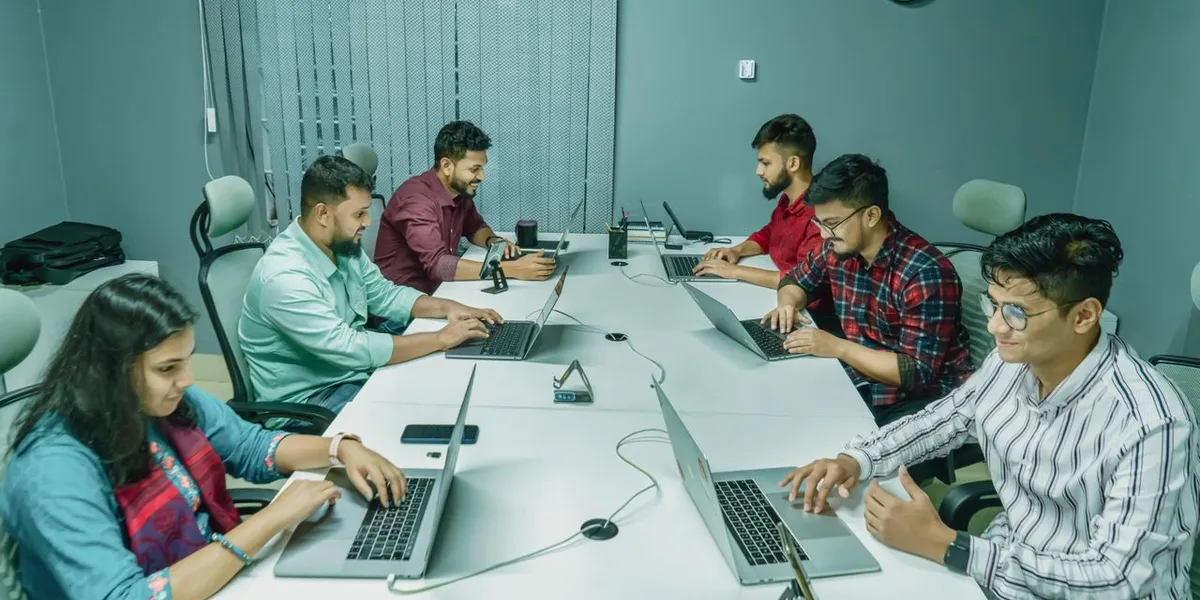
Visual 1
Repo integration
Engineers committing directly to your corporate Git repo from week one.
Visual 2
Daily standups
Active participation in your daily standups and sprint planning.
Visual 3
Weekly demos
Working software demoed every Friday with full test coverage.
Timeline
How Long Does dedicated developer Take?
Developer embedded within 1–2 weeks of agreement; monthly commitment. The same four delivery stages run every engagement — you approve progress at each gate before the next begins.
Stage 1
Skill & stack alignment
We review your codebase, stack, sprint tools and workflow to match developers with exact domain experience.
Stage 2
Repo & tool onboarding
Developers set up in your Git organization, Slack, and Jira — opening their first PR in week one.
Stage 3
Sprint integration
Daily standups, sprint planning, and weekly working demos — shipping tested PRs directly to your repo.
Stage 4
Flexible scaling
Scale up pod size as milestones demand, or wind down with 30-day notice and full documentation.

Pricing
What Drives the Cost of dedicated developer?
- 1
Seniority level and specialized domain expertise required
- 2
Pod size and mix of roles (full-stack, backend, DevOps, QA)
- 3
Timezone overlap requirements and engagement duration
Pricing shape: Predictable monthly rate per developer or pod; zero recruiter fees; 30-day flexible cancellation terms.
Indicative ranges live on the pricing page — your fixed quote arrives with the discovery scope.
Process
Delivery Stack and Pricing
Stages shown above — here is what they run on and how they are priced.
Stack & Tools
Git / GitHub / GitLabTypeScript / Node.jsReact / Next.jsPython / DjangoGoPostgreSQL / RedisDocker / KubernetesJira / LinearSlack / DiscordCI/CD AutomationsAWS / GCPFigma
Pricing Shape
Predictable monthly rate per developer or pod; zero recruiter fees; 30-day flexible cancellation terms.
Due Diligence
Technical Due Diligence FAQs
How much does dedicated developer cost?
After a short paid discovery (typically 1–3 weeks) you receive a fixed price with milestones. Predictable monthly rate per developer or pod; zero recruiter fees; 30-day flexible cancellation terms. Discovery is credited toward the build if you proceed.
How quickly can a dedicated engineering pod embed into our existing development team?
Our typical onboarding timeline from signed agreement to active code commits is between five and ten business days. Because our engineers are pre-vetted senior professionals with extensive experience in modern technology stacks (TypeScript, React, Next.js, Node.js, Python, PostgreSQL), they do not require weeks of basic technical training. Once granted repository access and added to your Slack and project management channels, our engineers review your existing documentation, configure local environments, and typically submit their first minor pull request within their first three days to validate your continuous integration and deployment pipelines.
How do you ensure timezone overlap and seamless communication with our domestic engineering team?
We maintain a mandatory minimum of four hours of daily live working overlap with your domestic engineering team's standard business hours (such as US Eastern, US Pacific, UK GMT, or Australian AEST). Our engineers participate actively in your morning standups, sprint planning ceremonies, and technical architecture reviews via Zoom or Google Meet. Throughout the working day, they communicate asynchronously and synchronously via Slack, Teams, or Jira, providing prompt responses and conducting real-time pair programming sessions whenever pairing is beneficial.
How do you vet and evaluate the technical seniority of your software engineers?
Our vetting process is rigorous and designed by former FAANG and enterprise engineering leaders. We evaluate fewer than three percent of applicant software engineers. Candidates undergo multi-stage technical assessments: live architectural design interviews, deep domain knowledge probing in TypeScript/PostgreSQL/Node.js, automated algorithmic evaluations, and practical repository code reviews where they must refactor real-world buggy applications and write comprehensive unit tests. We also rigorously evaluate English communication clarity, collaborative problem-solving skills, and autonomous proactive thinking.
Who manages the day-to-day work and task allocation of the dedicated development pod?
You maintain complete product and architectural direction. Our dedicated engineers integrate directly into your sprint backlog in Jira, Linear, or GitHub Projects, taking tasks assigned by your Product Manager, Engineering Manager, or Technical Lead. For pods of three or more engineers, we provide an experienced Technical Pod Lead who assists with technical decomposition, ensures adherence to your architectural standards, conducts internal code pre-reviews, and tracks sprint velocity, removing administrative management burden from your domestic leadership.
What happens if a developer is not the right fit for our company culture or technical requirements?
While our precise skill matching results in a 98% placement success rate, we provide a zero-risk staffing guarantee. If you determine within the first two weeks that an engineer is not the ideal cultural or technical fit, we will replace them immediately without additional onboarding charges, or you may terminate the engagement with zero penalty. Your engineering velocity and team harmony are our highest priorities.
Can we hire your dedicated developers permanently as full-time internal employees in the future?
Yes. Unlike traditional staffing agencies that strictly prohibit direct hiring or demand punitive 30-40% buyout penalties, we offer transparent, enterprise-friendly contract-to-hire transition pathways. After a minimum continuous engagement period (typically 6 to 12 months), organizations may transition embedded engineers into direct full-time internal employees under fair, pre-negotiated conversion terms, allowing you to de-risk permanent hiring while maintaining complete team continuity.
Who owns the code, intellectual property, and documentation authored by the dedicated engineers?
Your organization maintains one hundred percent exclusive, unconditional ownership of all source code, design systems, architectural documentation, database schemas, and intellectual property from the very first keystroke. All commits are authored directly in your corporate GitHub, GitLab, or Bitbucket repositories under your enterprise accounts. Our contracts include comprehensive intellectual property assignment clauses and mutual non-disclosure agreements protecting your trade secrets and proprietary data.
How do you protect our proprietary code and sensitive data from security leaks?
We enforce enterprise-grade security protocols across all dedicated personnel. Engineers work on secure, encrypted corporate machines configured with endpoint detection and response (EDR) software. Access to your systems is governed by your Single Sign-On (SSO) with mandatory Multi-Factor Authentication (MFA). Engineers never copy production data to local development machines; instead, we utilize synthetic mocked databases or containerized staging seed scripts. All activities are auditable through your corporate version control and communication logs.
What is your pricing structure, and are there hidden fees or long-term lock-in contracts?
We operate on a transparent, predictable monthly rate per engineer or pod based on seniority and specialized technical domain expertise. There are zero upfront recruitment fees, zero placement markup, zero infrastructure surcharges, and zero hidden exit penalties. Engagements operate on flexible monthly agreements with standard 30-day notice terms, allowing you to scale engineering capacity up or down dynamically as product roadmap milestones and funding cycles dictate.
What happens when our product roadmap milestone is complete and we need to ramp down capacity?
Ramping down or adjusting pod size is straightforward and seamless. With standard 30-day written notice, you can reduce pod headcount or pause the engagement entirely. Prior to departure, our engineers execute a structured knowledge transfer checklist: updating Architecture Decision Records, verifying that all pull requests are merged or documented, ensuring test suites are passing, and conducting recorded video walkthroughs for your remaining internal team so no institutional knowledge is lost.
How long does it take to start?
Discovery starts within days of agreement. Builds run in weekly sprints with a demo every week.
Who owns the work?
You do, under a signed agreement — code, docs and accounts are handed over at the end.
Content last reviewed September 2026.
Straight Talk
Mistakes We Prevent & How We Compare
Common mistakes we prevent
Hiring junior contractors who demand constant in-house senior supervision
Letting external developers work in separate, uncoordinated repository forks
Accepting code without automated unit and integration tests
Us vs the usual alternative
Onboarding
AnyPlace: Embedded in 1–2 weeks
Typical alternative: 3–5 months recruiting cycle
Quality
AnyPlace: Senior engineers, 85%+ test coverage
Typical alternative: Junior resumes, un-tested code
IP & Code
AnyPlace: Directly in your Git repo daily
Typical alternative: Black-box offshore delivery
Before
The starting point we usually find
Four months spent interviewing with zero hires; backlog grows and developers are burned out.
After
Where this service leaves you
Senior developers embedded in your repo shipping tested pull requests weekly — roadmap on track.
Worth knowing: According to SHRM data, the average cost per hire for a software engineer exceeds $4,700 and takes over 42 days — dedicated embedded pods eliminate hiring lag immediately. Source: Society for Human Resource Management · Verified September 2026
Related Services
Pairs Well With

Custom Software Development
Web platforms, business tools and APIs — planned in milestones, built in weekly sprints, handed over with docs and tests.
View service→

IT Outsourcing
Reliable engineering teams for projects and ongoing development — working in your repo with weekly demos and zero lock-in.
View service→

Cloud Setup & DevOps
Cloud hosting setup, CI/CD pipelines and cost hygiene on AWS, Azure or GCP — with runbooks your team can follow.
View service→
TELL US ABOUT YOUR PROJECT
Tell Us What to Build, Fix or Modernize
Send a short brief. We reply within 12 hours with clarifying questions and a discovery quote — no retainers, no spam.
What Happens Next
Request a Discovery Quote
Share your goals and timeline. NDA signed first if needed.
12-hour response