
Cloud Infrastructure & DevOps: Engineered for Immutable Reliability
Hosting that you can operate: accounts, environments, deploys, backups and cost alerts set up as code, with a runbook your team follows without calling us for every deploy.
Best for growing businesses in India, the USA, UK, Australia and Canada where deploys are manual, hosting grew organically, or nobody is sure what the cloud bill pays for — and you want it documented and repeatable. Fixed setup per environment plus walkthrough; monthly support optional.

Executive Brief
Strategic Context & Engineering Purpose
How our cloud setup engagements de-risk operational transitions and produce enduring software assets.
Operational Challenge
Mid-market enterprises and growing software organizations routinely suffer from fragile cloud hosting architectures that were provisioned through undocumented, manual cloud console interactions ('click-ops'). Staging environments drift drastically from production reality, multi-cloud hosting costs escalate unchecked with orphaned disk volumes and un-rightsized compute instances, and application deployments require high-stress maintenance windows relying on fragile shell scripts and manual FTP/SSH uploads. When production incidents strike, engineering teams are paralyzed by the absence of version-controlled infrastructure definitions, lack of centralized distributed tracing, and disaster recovery plans that remain purely theoretical until catastrophic downtime inflicts severe financial and reputational harm.
Architectural Approach
We engineer declarative, immutable cloud infrastructure utilizing Infrastructure as Code (Terraform, Terragrunt, OpenTofu) and enterprise container orchestration (Kubernetes EKS/GKE or AWS ECS). Our systems architects establish multi-account cloud organizational landing zones with strict network segmentation, private VPC subnets, and automated IAM least-privilege role boundaries. We implement automated GitOps continuous integration and continuous deployment (CI/CD) pipelines utilizing GitHub Actions, GitLab CI, or ArgoCD—featuring automated blue/green or canary rollout strategies with instant cryptographic rollback triggers. Every system is instrumented with unified observability pipelines (Prometheus, Grafana, OpenTelemetry) and FinOps automated cost allocation tags.
Measured Economic Impact
Transitioning to automated, immutable cloud infrastructure fundamentally alters enterprise operational velocity and balance sheet efficiency. Deployment frequency accelerates from stressful monthly releases to dozens of zero-downtime production deployments per week, while deployment failure rates drop below one percent. Infrastructure recovery time objectives (RTO) decrease from hours to under five minutes through automated multi-region snapshot restores and deterministic code-based provisioning. Rigorous FinOps resource rightsizing, automated development environment shutdowns, and commitment purchasing strategies eliminate between thirty and fifty percent of monthly cloud hosting waste within the first ninety days.
Governance & IP Custody
We enforce uncompromising transparency, radical security hygiene, and complete intellectual property handover throughout every DevOps engagement. All Terraform modules, Helm charts, CI/CD pipeline definitions, and Docker container manifests are developed directly inside your corporate version control repositories. All resources are provisioned strictly within your corporate AWS, GCP, or Azure accounts—we never host client assets within shared agency tenancies. Every milestone concludes with exhaustive disaster recovery fire drills, security posture benchmark audits (CIS Benchmarks), and recorded operational runbook walkthroughs, ensuring your internal engineers maintain autonomous operational control.
Engineering Architecture
Core Technical Blueprints & Subsystems
Every system is modularized into isolated subsystems with strict interface contracts and automated testing.
Declarative Infrastructure as Code & Immutable Cloud Provisioning
Terraform/OpenTofu modular blueprints, remote state locking, and drift detection
Manual cloud configuration creates dangerous configuration drift and undocumented single points of failure. We architect modular, reusable Infrastructure as Code (IaC) libraries using Terraform and Terragrunt across multi-account AWS, GCP, or Azure environments. Every VPC, subnet route table, internet gateway, NAT gateway, security group, and managed database is defined declaratively in version-controlled repositories. Remote state files are encrypted at rest with AWS KMS and protected against concurrent execution anomalies via DynamoDB distributed state locking. Automated GitHub Actions CI workflows execute drift detection runs daily, alerting your engineering team whenever an out-of-band manual configuration change occurs.
Code & Schema Deliverables:
- Modular Terraform / OpenTofu codebase covering complete cloud networking, compute, and data layers
- Multi-account cloud landing zone architecture adhering to AWS Organizations and Control Tower best practices
- Encrypted remote state management architecture with automated DynamoDB state locking and state backups
- Automated infrastructure drift detection pipelines notifying Slack/Teams of unauthorized manual changes
Failure Modes Prevented:
- ✕Production downtime caused by un-tracked manual console clicks or forgotten configuration changes
- ✕Corrupted or overwritten cloud state files during concurrent multi-engineer deployment runs
- ✕Environment drift between staging and production resulting in catastrophic release failures
- ✕Security group misconfigurations accidentally exposing private database ports to the public internet
Tech Stack
Kubernetes Orchestration, Elastic Auto-Scaling & Service Mesh
Containerized application delivery on EKS/GKE with horizontal pod autoscaling and mTLS
Enterprise applications requiring high availability and container portability demand resilient cluster orchestration. We architect production-ready Kubernetes clusters on AWS EKS, GCP GKE, or Azure AKS using declarative Helm charts and Kustomize overlays. Worker nodes are configured with mixed on-demand and spot instance node groups managed by Karpenter, automatically provisioning and terminating compute capacity in seconds based on real-time application memory and CPU pressure. Inter-service communications are secured via a lightweight service mesh (Istio or Linkerd) enforcing mutual TLS (mTLS) encryption, circuit breaking, and granular ingress routing rules that isolate internal microservices from direct public network exposure.
Code & Schema Deliverables:
- Production-hardened Kubernetes cluster architecture on AWS EKS or GCP GKE with Karpenter autoscaling
- Declarative Helm charts and Kustomize manifests with strict resource requests, limits, and probe checks
- Mutual TLS (mTLS) service mesh implementation securing all inter-pod communications and routing
- Enterprise ingress controller architecture with automated TLS certificate management via Let's Encrypt
Failure Modes Prevented:
- ✕Cascading cluster outages caused by unconstrained pod memory leaks through strict OOM resource limits
- ✕Traffic drops during sudden viral traffic surges due to slow node provisioning resolved by Karpenter in seconds
- ✕Lateral attacker movement across internal microservices prevented via zero-trust network policies and mTLS
- ✕Production service interruptions during routine Kubernetes control plane and worker node version upgrades
Tech Stack
GitOps Continuous Delivery, Canary Rollouts & Automated Rollbacks
ArgoCD declarative deployments, blue/green traffic splitting, and automated health gates
Shipping software rapidly without sacrificing stability requires decoupling continuous integration from production continuous deployment. We implement declarative GitOps delivery pipelines powered by ArgoCD or Flux. When developers merge tested code into the main branch, GitOps controllers running inside your cluster detect the updated container digest in your private registry (ECR/GAR) and reconcile the live cluster state automatically. Critical applications utilize progressive delivery with Argo Rollouts, steering five percent of production user traffic to the canary release while monitoring automated Prometheus error rate metrics. If HTTP 5xx error spikes or latency anomalies are detected, the canary is aborted instantly and traffic rolls back in under two seconds with zero user disruption.
Code & Schema Deliverables:
- ArgoCD / Flux GitOps deployment controller configuration with automated repository state synchronization
- Progressive delivery architecture utilizing Argo Rollouts for automated canary and blue/green deployments
- Automated metric analysis gates validating latency and error rate thresholds prior to traffic promotion
- Ephemeral feature preview environment pipelines spinning up temporary isolated stacks on pull requests
Failure Modes Prevented:
- ✕Company-wide customer outages caused by deploying buggy application code to 100% of users simultaneously
- ✕Slow, panic-driven manual rollback procedures during production failures replaced by automated rollback gates
- ✕Production deployment drift where code running on servers does not match any committed Git commit hash
- ✕Developer release friction and bottlenecks caused by shared, contention-heavy manual staging environments
Tech Stack
Unified Cloud Observability, Distributed Tracing & FinOps Cost Controls
Prometheus, Grafana, OpenTelemetry, automated cost tagging, and SLA telemetry
Operating complex cloud environments requires full-stack telemetry and proactive cost hygiene. We deploy unified observability stacks leveraging Prometheus, Grafana, Loki, and OpenTelemetry. Application services emit distributed traces that map end-to-end user request lifecycles across microservices and database queries, pinpointing high-latency bottlenecks with sub-millisecond precision. On the financial governance side, we implement comprehensive FinOps tagging policies (CostCenter, Environment, Owner, Application), configure AWS Cost Anomaly Detection with automated Slack webhook alerts, and implement automated lifecycle rules that transition aging logs and snapshot backups to cold Glacier storage.
Code & Schema Deliverables:
- Centralized Prometheus and Grafana monitoring cluster with pre-configured SLI/SLO dashboards
- OpenTelemetry distributed tracing pipeline identifying slow database queries and external API bottlenecks
- Automated FinOps cost allocation tagging policy with real-time Slack anomaly detection webhooks
- Comprehensive multi-channel alerting rules covering CPU, memory, disk saturation, and certificate expiry
Failure Modes Prevented:
- ✕Silent application failures and memory leaks going undetected until customers complain on social media
- ✕Hours of frustrating engineering guesswork required to identify which specific microservice caused request latency
- ✕Shocking end-of-month cloud bills caused by forgotten development clusters or rogue runaway worker scripts
- ✕Storage volume exhaustion and sudden database crashes due to missing disk space utilization alerts
Tech Stack
Engineering Governance
Engineering Standards, QA & Security Protocols
Rigorous development disciplines that protect your code quality, deployment velocity, and infrastructure security.
Zero-Trust Cloud Network Segmentation & Least Privilege IAM
Cloud SecurityAll cloud compute operates within private subnets with zero direct public internet IP allocation. Ingress occurs strictly through application load balancers with WAF. IAM roles utilize temporary STS credentials with fine-grained resource boundaries, and administrative access enforces MFA.
Tooling & Rails
Deterministic State Locking & Automated Drift Detection
Infrastructure GovernanceInfrastructure changes execute exclusively via automated CI/CD pipelines with remote DynamoDB state locking. Daily scheduled cron workflows evaluate production state against Git repository declarations, generating alerts upon any manual configuration drift.
Tooling & Rails
Automated Disaster Recovery Verification & Chaos Drills
Reliability & ResilienceAutomated snapshot backup routines execute daily with cross-region replication. Every quarter, automated pipelines restore a staging database from production backup snapshots and execute end-to-end integration tests, validating real-world recovery time objectives (RTO).
Tooling & Rails
FinOps Cloud Unit Economics & Resource Lifecycle Enforcement
Financial OptimizationEvery provisioned cloud resource requires mandatory CostCenter, Owner, and Environment metadata tags enforced via policy-as-code. Development and staging environments automatically shut down outside business hours, saving 65% on non-production compute bills.
Tooling & Rails
Production Case Evidence
Detailed Architecture Problem-Solution Blueprints
Real-world engineering case blueprints detailing baseline bottlenecks, technical intervention, and verified production metrics.

Operational Bottleneck & Root Cause
Production deployments required two-hour maintenance windows on Sunday evenings, leading to frequent deployment failures, customer downtime, and developer burnout.
Root Cause: Single EC2 monolithic instance with un-versioned manual deployments via SSH, lacking staging environments, automated tests, or rollback mechanisms.
Engineered Architecture
Migrated the platform to containerized AWS EKS managed by Terraform, with GitOps automated continuous delivery via ArgoCD and blue/green deployment rollouts.
Measured Result
Zero maintenance windows required; deployment frequency increased from bi-weekly to 15 times daily; system uptime improved to 99.99%.
Operational Bottleneck & Root Cause
The client was hemorrhaging $48,000 monthly on AWS infrastructure with no clear visibility into which customers or microservices were driving compute expenses.
Root Cause: Over-provisioned EC2 instances running 24/7 at 8% CPU utilization, thousands of orphaned EBS snapshot volumes, and lack of resource cost allocation tagging.
Engineered Architecture
Executed comprehensive FinOps refactoring: right-sized compute using Karpenter spot instances, deleted orphaned volumes, and automated staging cluster shutdowns.
Measured Result
Monthly AWS cloud expenditures plummeted from $48,000 to $19,500 (59% recurring savings); complete visibility via CostCenter dashboards.
Operational Bottleneck & Root Cause
The engineering team failed a critical enterprise customer SOC 2 audit due to shared root credentials, missing encrypted backups, and lack of access logs.
Root Cause: Unorganized single AWS account with manual click-ops setup, no IAM role boundaries, and un-encrypted S3 buckets storing patient consultation records.
Engineered Architecture
Rebuilt the cloud architecture using AWS Control Tower multi-account landing zones, enforced IAM least privilege via Okta SSO, and encrypted all S3 storage via KMS.
Measured Result
Achieved clean SOC 2 Type II certification with zero audit findings; secured $4.2M enterprise healthcare health system contract.
Operational Bottleneck & Root Cause
Game backend servers crashed repeatedly during global tournament events, failing to scale compute capacity fast enough to handle 10x traffic surges.
Root Cause: Standard Kubernetes Cluster Autoscaler took 8-12 minutes to provision new EC2 virtual machines, lagging behind explosive gamer connection spikes.
Engineered Architecture
Implemented Karpenter node autoscaling with pre-warmed spot instance capacity pools and Redis cache cluster sharding across three availability zones.
Measured Result
Node provisioning latency dropped from 10 minutes to 42 seconds; zero dropped connections during 250,000 concurrent player tournament launch.
Sprint Delivery Cadence
Phased Sprint Roadmap & Quality Gates
Predictable milestone delivery with working software demoed every week in your repository.
Phase 01: Cloud Architecture Audit, Security Baseline & Landing Zone
Account inventory, security gap analysis, and multi-account cloud landing zone design
Deliverables:
- Comprehensive cloud infrastructure security posture audit against CIS and AWS Well-Architected frameworks
- Multi-account cloud organizational landing zone architecture plan with network CIDR allocation
- Automated Terraform remote state backend setup with KMS encryption and DynamoDB state locking
- IAM identity federation blueprint integrating corporate Google Workspace, Okta, or Azure AD SSO
Gate Criteria
Approval of multi-account architecture blueprint and clean security baseline configuration.
Phase 02: Infrastructure as Code Modularization & Network Perimeter
Terraform codebase authoring, VPC network isolation, and database cluster provisioning
Deliverables:
- Complete modular Terraform codebase defining multi-AZ VPCs, subnets, NAT gateways, and routing
- Managed database cluster provisioning (Aurora PostgreSQL / MySQL) with automated failover and encryption
- Kubernetes cluster deployment (EKS/GKE) with Karpenter autoscaling and node group configurations
- Secret management architecture implemented via AWS Secrets Manager or HashiCorp Vault
Gate Criteria
Successful automated Terraform plan and apply in isolated staging environment with zero manual console intervention.
Phase 03: GitOps Continuous Delivery & Automated Rollback Gates
CI/CD pipelines, container registries, ArgoCD controllers, and progressive canary rollouts
Deliverables:
- Automated GitHub Actions CI workflows compiling containers and scanning images with Trivy
- ArgoCD / Flux GitOps controller deployment with automated cluster synchronization
- Argo Rollouts progressive delivery implementation with automated metric-based rollback gates
- Ephemeral preview environment automation provisioning temporary testing environments on pull requests
Gate Criteria
Demonstrated zero-downtime canary deployment with simulated failure triggering automatic 2-second rollback.
Phase 04: Observability, FinOps Policies & Production Handover
Prometheus/Grafana telemetry, cost alerting, disaster recovery drills, and runbook walkthrough
Deliverables:
- Production observability dashboard setup covering Golden Signals (Latency, Traffic, Errors, Saturation)
- FinOps cost allocation tagging enforcement and automated Slack anomaly notification webhooks
- Simulated disaster recovery drill restoring production database snapshots to isolated validation environment
- Comprehensive operational runbook, architecture documentation, and recorded staff engineering handover
Gate Criteria
Successful disaster recovery verification meeting <15 minute RTO, complete runbook sign-off, and full IP handover.
Financial Transparency
Total Cost of Ownership & Risk Mitigation
Understand the core technical variables that dictate development investment and long-term operating costs.
Automated Infrastructure as Code vs Manual Click-Ops Maintenance
TCO VariablePrimary Cost Driver
Manual cloud configuration requires hundreds of hours of senior engineering time to troubleshoot configuration discrepancies and recreate broken environments.
Risk Without Proper Architecture
Organizations suffer from tribal knowledge silos where only one or two engineers know how servers are configured, risking complete downtime if they leave.
Our Engineering Mitigation
We codify 100% of cloud resources in declarative Terraform blueprints, allowing any engineer to spin up or recover identical environments in minutes.
Proactive FinOps Rightsizing vs Runaway Cloud Spending
TCO VariablePrimary Cost Driver
Un-monitored cloud environments routinely experience 30-50% financial waste through over-provisioned VMs, unattached storage volumes, and forgotten staging servers.
Risk Without Proper Architecture
Cloud bills compound monthly without accountability, draining capital that should be allocated to core product development and marketing growth.
Our Engineering Mitigation
We implement Karpenter spot instance orchestration, automated non-production shutdowns, and FinOps cost tagging, permanently cutting hosting waste.
Zero-Downtime Deployment Automation vs Production Downtime Revenue Loss
TCO VariablePrimary Cost Driver
Downtime during business hours or failed software releases inflicts direct financial losses and destroys enterprise customer trust.
Risk Without Proper Architecture
Manual deployments with maintenance windows force stressful weekend work, cause frequent customer outages, and slow release cadence.
Our Engineering Mitigation
Our GitOps pipelines with Argo Rollouts canary verification and automatic 2-second rollbacks eliminate deployment downtime and reduce release risk to zero.
Tested Disaster Recovery Routines vs Catastrophic Data Loss
TCO VariablePrimary Cost Driver
Ransomware incidents, cloud zone outages, or accidental database deletions can permanently destroy companies lacking verified recovery procedures.
Risk Without Proper Architecture
Relying on un-tested backup snapshots leads to tragic discovery during real disasters that backups are corrupted or un-restorable.
Our Engineering Mitigation
We automate daily cross-region snapshot backups and execute quarterly programmatic restore drills that verify recovery time and point objectives.
Results
What This Service Delivers

Outcome 1
Environments reproducible from code, not memory
Every environment reproducible from committed code — staging mirrors live, and experiments stop risking revenue.
Outcome 2
Deploys in minutes with a rollback path
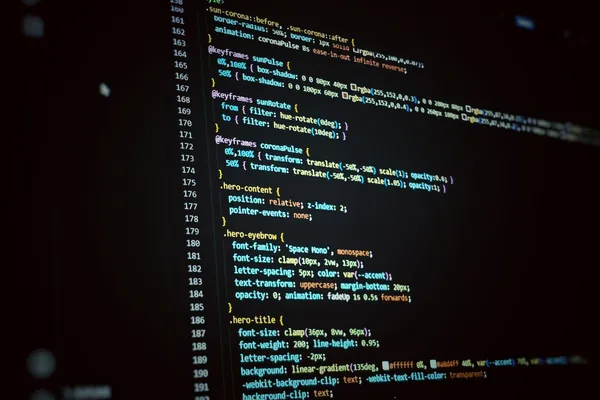
Deploys run through a pipeline with preview links and one-click rollback — releases on weekdays, calmly.

Outcome 3
A bill you can read, with alerts before surprises
Tagged spend with alerts: the bill arrives itemized by service and owner, with warnings before surprises.
Fit Check
Is This Service Right for Your Business?
When It Fits
Deploys are manual, hosting grew organically, or nobody is sure what the cloud bill pays for — and you want it documented and repeatable.
✕When It Doesn't
You need 24/7 managed hosting with on-call response — we set up and hand over; ongoing ops needs a managed provider.
Use Cases
Business Use Cases We Serve
Manual deploys
Releases mean SSH, zips and hope — replaced with a pipeline, previews and one-click rollback.
Mystery cloud bill
Charges grow monthly with no owner — inventoried, tagged, rightsized and alerted.
No staging or backups
Live is the only environment and restores are untested — staging plus verified backup routine added.
Gallery
What Typical Deliverables Look Like
Sample deliverables from a typical engagement — yours follow the same shape, scoped to your business.

Visual 1
Pipeline runs
Every deploy logged with preview, checks and one-click rollback.
Visual 2
Environment map
Accounts, apps and DNS drawn as code — no tribal knowledge.
Visual 3
Cost alerts
Tagged spend with alerts before the bill surprises anyone.
Timeline
How Long Does cloud setup Take?
Setup typically 1–2 weeks per environment, then handover walkthrough. The same four delivery stages run every engagement — you approve progress at each gate before the next begins.
Stage 1
Inventory
Accounts, apps, DNS, bills and access — everything listed before anything changes.
Stage 2
Baseline
Staging environment plus backup-and-restore test, so experiments stop risking live.
Stage 3
Automate
Pipeline, environments-as-code and cost alerts, committed where you can read them.
Stage 4
Handover
Runbook walkthrough: deploy, rollback, restore, and who pays for what.

Pricing
What Drives the Cost of cloud setup?
- 1
Number of environments and cloud accounts
- 2
Migration complexity and downtime constraints
- 3
Compliance and backup requirements
Pricing shape: Fixed setup per environment plus walkthrough; monthly support optional.
Indicative ranges live on the pricing page — your fixed quote arrives with the discovery scope.
Process
Delivery Stack and Pricing
Stages shown above — here is what they run on and how they are priced.
Stack & Tools
AWSGoogle CloudMicrosoft AzureTerraform / OpenTofuKubernetes (EKS/GKE)DockerGitHub Actions / GitLab CIArgoCDPrometheus / GrafanaHelmNginxCloudflare
Pricing Shape
Fixed setup per environment plus walkthrough; monthly support optional.
Due Diligence
Technical Due Diligence FAQs
How much does cloud setup cost?
After a short paid discovery (typically 1–3 weeks) you receive a fixed price with milestones. Fixed setup per environment plus walkthrough; monthly support optional. Discovery is credited toward the build if you proceed.
What are the core differences between Terraform, OpenTofu, and cloud-native tools like AWS CloudFormation?
AWS CloudFormation is deeply integrated into AWS but restricts your infrastructure definitions strictly to the Amazon ecosystem. Terraform (and its open-source fork OpenTofu) provides a unified declarative syntax and provider ecosystem capable of managing AWS, Google Cloud, Azure, Cloudflare, Datadog, GitHub, and Kubernetes within a single coordinated codebase. By adopting Terraform or OpenTofu, your organization avoids single-vendor cloud lock-in, ensures multi-cloud portability where appropriate, and leverages the world's largest community of pre-audited infrastructure modules. During our engagements, we author clean, modular Terraform/OpenTofu code that your team can run independently without proprietary platform dependencies.
How does GitOps with ArgoCD differ from traditional CI/CD push-based deployments?
Traditional CI/CD pipelines (like Jenkins or basic GitHub Actions scripts) use a 'push' model: external build runners are granted direct administrative SSH or kubeconfig access to push changes into production clusters, creating significant security exposure if CI runners are compromised. GitOps, conversely, operates on an internal 'pull' model: an agent running inside your Kubernetes cluster (such as ArgoCD) continuously monitors your Git repository for declared state changes. When developers merge an approved pull request, ArgoCD pulls the new configuration and reconciles the cluster automatically. This eliminates external administrative cluster access, provides an immutable cryptographic audit log of all changes in Git, and enables instantaneous one-click rollbacks simply by reverting a Git commit.
How do you achieve zero-downtime database migrations in production cloud environments?
Zero-downtime database schema migrations require disciplined architectural sequencing using the Expand-Contract pattern rather than destructive single-step alterations. In Phase One (Expand), we add new nullable database columns or new tables alongside existing structures without breaking running application versions. In Phase Two, application code is deployed that writes to both old and new columns simultaneously while reading from the old structure. In Phase Three, a background data backfill script synchronizes historical records. In Phase Four, code is switched to read from the new structure. Finally, in Phase Five (Contract), old deprecated columns are safely dropped. This process ensures database changes never lock tables or break compatibility with active user traffic.
How do you ensure staging environments exactly mirror production without incurring massive cloud costs?
We ensure structural parity between staging and production by provisioning both from the exact same modular Terraform blueprints, parameterizing only compute instance sizes, replica counts, and storage tiers. To eliminate unnecessary hosting expenses, we deploy staging environments using Kubernetes spot instances and lightweight managed database instances, and configure automated cron lifecycle rules that scale staging workloads to zero outside of normal business operating hours (such as 7:00 PM to 7:00 AM and weekends). This approach provides your developers with an identical testing topology while reducing non-production hosting expenses by over sixty-five percent.
What specific strategies do you use to rapidly reduce existing, runaway AWS or GCP monthly cloud bills?
Our FinOps engagement begins with a comprehensive cost audit. We immediately identify and terminate unattached EBS storage volumes, unassociated Elastic IP addresses, abandoned manual RDS snapshots, and outdated development test instances. Next, we rightsize over-provisioned compute resources by analyzing 30-day CPU and memory utilization percentiles, transitioning underutilized workloads to modern ARM-based instances (such as AWS Graviton3) which deliver up to 40% better price-performance. We implement Karpenter for Kubernetes compute to leverage spot instances for non-critical workloads, configure automated S3 intelligent tiering to transition aging data to Glacier storage, and assist leadership in purchasing Savings Plans or Reserved Instances for predictable baseline capacity.
How do you handle cloud security compliance frameworks such as SOC 2 Type II, HIPAA, or ISO 27001?
We engineer cloud environments to satisfy enterprise compliance requirements from day one. This includes provisioning multi-account AWS Organizations landing zones that completely isolate production workloads from development and staging environments. We enforce encryption at rest across all databases and object storage buckets using customer-managed AWS KMS keys with automated annual key rotation. We configure AWS CloudTrail to write immutable, tamper-evident audit logs to a locked, separate security account with S3 Object Lock. We enforce multi-factor authentication (MFA) via enterprise Single Sign-On (SSO) with zero permanent IAM user access keys, and implement automated continuous compliance scanning using tools like Trivy and AWS Security Hub.
What is your approach to disaster recovery (DR) and automated backup verification?
A disaster recovery plan that has never been tested is merely a theoretical hope. We implement automated multi-region backup architectures leveraging AWS Backup or native database replication. Transaction logs (WAL) are shipped continuously to support Point-in-Time Recovery (PITR) with recovery point objectives (RPO) under five minutes. To verify recovery time objectives (RTO), we engineer automated quarterly disaster recovery drills: an automated CI pipeline restores production database backups into an isolated sandbox environment, runs comprehensive synthetic application validation tests, verifies data integrity, and measures total restoration elapsed time, generating an executive audit report certifying business continuity.
How do you monitor distributed microservices and detect production performance bottlenecks?
We implement full-stack observability following the OpenTelemetry standard. Application services are instrumented to emit structured logs, metrics, and distributed traces. When a user initiates an action, a unique W3C trace context header propagates across all downstream API gateways, microservices, database queries, and external API calls. These traces are collected and visualized in Grafana Tempo or Datadog, allowing engineers to inspect the exact call hierarchy of slow requests and identify the specific database query or external service causing latency. We establish automated alerting rules on the Four Golden Signals: latency percentiles (p50, p95, p99), traffic volume, error rates (HTTP 5xx), and resource saturation.
Who owns the cloud accounts, infrastructure repositories, and deployment configurations?
Your organization maintains absolute, unconditional ownership of all cloud accounts, infrastructure source code, CI/CD pipeline definitions, and configuration secrets from the very first day. We perform all work directly within your corporate AWS, GCP, or Azure accounts and your corporate GitHub or GitLab repositories. We never utilize intermediary agency hosting accounts or proprietary closed-source deployment wrappers. Upon project handover, full administrative credentials, IAM policies, and comprehensive architectural documentation are verified in your custody with zero ongoing licensing encumbrances or vendor lock-in.
What ongoing support, maintenance, and emergency incident response options do you provide post-launch?
Following production cutover, we provide structured ongoing support agreements tailored to your internal team's capabilities. For organizations with dedicated in-house engineers, we offer tier-three architectural advisory retainers and quarterly security/FinOps reviews. For businesses requiring operational assistance, we offer ongoing DevOps support covering automated dependency security patching, Kubernetes version upgrades, CI/CD pipeline enhancements, and continuous infrastructure optimization. We configure automated alerting through PagerDuty or Opsgenie to ensure rapid triage and resolution of any infrastructure anomalies.
How long does it take to start?
Discovery starts within days of agreement. Builds run in weekly sprints with a demo every week.
Who owns the work?
You do, under a signed agreement — code, docs and accounts are handed over at the end.
Content last reviewed September 2026.
Straight Talk
Mistakes We Prevent & How We Compare
Common mistakes we prevent
Click-ops with no record — everything defined as code
One environment for everything — staging separated first
Backups never restore-tested — tested before handover
Us vs the usual alternative
Setup
AnyPlace: Code-defined and reviewable
Typical alternative: Manual console clicks, undocumented
Deploys
AnyPlace: Pipeline with rollback
Typical alternative: FTP/SSH on a Friday
Costs
AnyPlace: Tagged with alerts
Typical alternative: Surprise bills, no owner
Before
The starting point we usually find
Deploys mean SSH and hope; the cloud bill grows monthly with no owner.
After
Where this service leaves you
Pipeline deploys in minutes with rollback, and a bill anyone can read — staging, backups and alerts included.
Worth knowing: AWS publishes its Well-Architected Framework covering reliability, security and cost awareness — the checklist our setups follow. Source: AWS Well-Architected · Verified September 2026
Related Services
Pairs Well With

Custom Software Development
Web platforms, business tools and APIs — planned in milestones, built in weekly sprints, handed over with docs and tests.
View service→
Security Reviews & Hardening
Config and code reviews, access cleanup and fix lists prioritized by risk — no scare tactics, just actionable reports.
View service→

Data Pipelines & Dashboards
Centralize messy data from multiple tools into dashboards your leadership actually checks weekly.
View service→
TELL US ABOUT YOUR PROJECT
Tell Us What to Build, Fix or Modernize
Send a short brief. We reply within 12 hours with clarifying questions and a discovery quote — no retainers, no spam.
What Happens Next
Request a Discovery Quote
Share your goals and timeline. NDA signed first if needed.
12-hour response