
Software Testing & QA: Engineered for Zero-Defect Delivery
Testing that speeds up releases instead of stalling them: automated browser tests, API checks, test data setups and a repeatable pre-release checklist your team keeps.
Best for growing businesses in India, the USA, UK, Australia and Canada where releases are stressful, bugs keep slipping to production, and manual testing is slowing your team down. Fixed-price test automation build based on critical journey scope; ongoing test suite maintenance optional.

Executive Brief
Strategic Context & Engineering Purpose
How our QA testing engagements de-risk operational transitions and produce enduring software assets.
Operational Challenge
Modern software development organizations face severe release bottlenecks, high QA payroll overhead, and compounding customer churn caused by production software regressions. As application codebases expand in complexity, relying on manual ad-hoc testing forces engineering teams into high-stress multi-day testing freezes prior to every production release. Despite manual effort, critical revenue-generating flows—such as credit card checkout funnels, complex billing calculation engines, multi-tenant permission gates, and mobile responsive forms—frequently break after routine feature deployments. When customer-facing bugs escape to production, engineering teams are thrown into emergency firefighting, brand reputation erodes, and commercial sales pipelines stall under executive scrutiny.
Architectural Approach
We design and engineer comprehensive, automated quality engineering frameworks that shift testing left and enable continuous, confident software deployment. Our quality architects author automated end-to-end browser regression suites utilizing Playwright and Cypress, executing parallel headless browser tests across Chromium, WebKit (Safari), and Firefox viewports on every pull request. We implement resilient REST and GraphQL API contract testing using Postman and Supertest, validating payload schemas, boundary conditions, and database mutation states with strict assertions. To protect platforms from catastrophic high-traffic crashes, we execute distributed load and stress testing using k6 and Apache JMeter, simulating thousands of concurrent virtual users to identify database deadlocks, memory leaks, and network bottlenecks before major commercial launches.
Measured Economic Impact
Implementing an automated quality engineering framework transforms software release economics and development velocity. Customer-reported production regression defects drop by over ninety percent, while software release cycles accelerate from stressful bi-monthly maintenance windows to dozens of calm, zero-downtime production deployments per week. Manual QA testing time and regression payroll expenses decrease by seventy percent as automated CI/CD test suites validate hundreds of mission-critical user journeys in under ten minutes. Furthermore, passing automated test suites provide verifiable cryptographic evidence that satisfies enterprise customer vendor security assessments and SOC 2 Type II audit requirements.
Governance & IP Custody
We enforce radical transparency, strict test automation discipline, and unconditional intellectual property transfer from day one. All automated test scripts, synthetic data generation fixtures, load testing configurations, and CI/CD test pipeline runners are authored directly inside your corporate GitHub or GitLab repositories under standard commercial licenses. We do not utilize proprietary vendor testing clouds that extract recurring per-test execution taxes. Every test suite is designed with resilient web-first assertions that eliminate flakiness. Upon delivery, comprehensive test coverage matrices and recorded maintenance walkthroughs ensure that your internal engineering team can easily maintain and extend the test suite.
Engineering Architecture
Core Technical Blueprints & Subsystems
Every system is modularized into isolated subsystems with strict interface contracts and automated testing.
End-to-End Automated Browser Regression Frameworks
Playwright cross-browser testing, parallel execution, and automated trace recordings
Manual browser testing is slow, expensive, and fails to catch cross-browser layout breaks across mobile and desktop devices. We engineer modern, automated end-to-end regression suites utilizing Playwright. Tests execute in headless parallel worker pools across Chromium, WebKit (Safari), and Firefox, validating critical user journeys—such as user authentication, complex form onboarding, multi-step checkouts, and dashboard data filtering. Playwright's web-first assertions and auto-waiting architecture completely eliminate brittle, arbitrary sleep timeouts. When a test failure occurs in CI, the framework automatically records full-motion video, DOM snapshots, network request waterfalls, and console logs, allowing developers to diagnose and fix the root cause in minutes.
Code & Schema Deliverables:
- Complete Playwright end-to-end test suite covering mission-critical user journeys and conversion funnels
- Cross-browser and responsive mobile viewport test execution across Chromium, Safari WebKit, and Firefox
- Automated trace, video, and screenshot capture on CI test failures for instant developer triage
- Synthetic test data seeding scripts generating isolated, repeatable database states for testing
Failure Modes Prevented:
- ✕Critical checkout and payment funnel breaks escaping to production after minor frontend updates
- ✕Safari-specific or mobile browser layout bugs that go unnoticed during desktop-only testing
- ✕Flaky, intermittent CI test failures caused by brittle sleep timeouts and timing race conditions
- ✕Hours of developer frustration spent attempting to reproduce intermittent bugs without visual traces
Tech Stack
Resilient API Contract & Integration Test Automation
REST & GraphQL schema validation, authentication boundaries, and state verification
User interfaces are only as reliable as the backend APIs that power them. We architect automated API integration and contract test suites using Supertest, Postman, or Vitest. Tests probe every RESTful endpoint and GraphQL query, verifying strict JSON schema compliance, HTTP status code accuracy, error payload handling, and transactional database state mutations. We execute negative testing across unauthorized access boundaries, invalid parameter types, and malicious injection payloads, verifying that application middleware properly sanitizes inputs and enforces role-based access control (RBAC) before requests reach business logic layers.
Code & Schema Deliverables:
- Automated API integration test suite validating REST and GraphQL endpoints against OpenAPI schemas
- Negative boundary testing validating input sanitization, rate limiting, and RBAC authorization gates
- Automated database state verification asserting that API calls execute expected ACID transactions
- Mock service virtualization mocking third-party payment rails and external SaaS API responses
Failure Modes Prevented:
- ✕Silent API contract drift where backend schema modifications break frontend web and mobile applications
- ✕Broken Object Level Authorization (BOLA/IDOR) vulnerabilities allowing unauthorized data access
- ✕Database corruption caused by unhandled edge-case payloads bypassing server-side validation
- ✕Third-party API downtime stalling internal automated integration test suites during development
Tech Stack
High-Concurrency Load, Stress & Performance Engineering
k6 distributed virtual users, latency percentiles, and database bottleneck profiling
Discovering that your web application cannot scale during a high-stakes marketing campaign or Black Friday sales surge is an expensive commercial disaster. We engineer distributed load and stress testing scenarios using Grafana k6. We simulate realistic user behavior—including session think time, dynamic payload variations, and authentic browsing distributions—scaling from hundreds to tens of thousands of concurrent virtual users (VUs). We benchmark p50, p95, and p99 response times, profile database connection pool saturation, identify un-indexed SQL queries, and determine the exact breaking threshold of your cloud infrastructure, providing actionable optimization blueprints to ensure high-traffic resilience.
Code & Schema Deliverables:
- Modular Grafana k6 load testing scripts modeling realistic multi-step user traffic distributions
- Stress and spike testing scenarios identifying exact infrastructure failure thresholds and bottlenecks
- Comprehensive performance audit report analyzing p50, p95, p99 latency, error rates, and CPU/memory pressure
- Actionable engineering remediation recommendations for database query indexing and caching
Failure Modes Prevented:
- ✕Catastrophic server crashes and 504 Gateway Timeouts during promotional spikes or viral marketing drops
- ✕Database connection pool exhaustion locking up all web requests under concurrent multi-user load
- ✕Unacceptable user latency degradation during peak traffic hours driving customer cart abandonment
- ✕Wasting money over-provisioning cloud servers when targeted database indexing resolves bottlenecks
Tech Stack
Continuous CI/CD Test Pipeline & Flaky Test Quarantine
GitHub Actions parallel runners, sub-10-minute CI budgets, and flaky test isolation
Automated test suites lose all engineering value if they take forty minutes to run or fail intermittently due to flaky tests. We architect high-speed, parallel continuous integration testing pipelines in GitHub Actions or GitLab CI. Tests are sharded across multiple parallel container runners, optimizing build budgets to complete comprehensive test runs in under ten minutes. We implement automated flaky test detection algorithms that flag and quarantine non-deterministic tests into an isolated reporting bucket, preventing flaky tests from blocking pull request merges while providing diagnostic telemetry so engineers can fix them immediately.
Code & Schema Deliverables:
- Optimized GitHub Actions / GitLab CI test pipeline with test sharding across parallel container runners
- Sub-10-minute CI execution budget ensuring rapid developer feedback and continuous release velocity
- Automated flaky test quarantine system isolating non-deterministic tests without blocking deploys
- Executive test telemetry dashboard tracking pass rates, execution duration, and defect escape trends
Failure Modes Prevented:
- ✕Slow, bloated CI builds that paralyze engineering velocity and delay urgent production bug hotfixes
- ✕Developer cynicism where engineers ignore failing test runs because 'the tests are always flaky'
- ✕Deployment bottlenecks caused by single-threaded, un-sharded test suites timing out on large repos
- ✕Lack of executive visibility into software defect escape rates and overall codebase reliability trends
Tech Stack
Engineering Governance
Engineering Standards, QA & Security Protocols
Rigorous development disciplines that protect your code quality, deployment velocity, and infrastructure security.
Parallel Test Execution with Sub-10-Minute CI Budgets
CI/CD PerformanceAll automated test suites are sharded across parallel container runners in GitHub Actions. Total CI execution time from pull request creation to test completion is strictly enforced to complete in under ten minutes to maintain developer flow.
Tooling & Rails
Zero-Flakiness Guarantee via Web-First Assertions
Test ReliabilityArbitrary sleep timeouts (e.g. sleep(5000)) are strictly prohibited in test code. All assertions utilize Playwright auto-waiting web-first assertions (expect(locator).toBeVisible()) that poll automatically with smart timeouts, eliminating race conditions.
Tooling & Rails
Realistic Synthetic Test Data Generation & Isolation
Data IntegrityTests never share static, mutable database state. Each test suite execution provisions isolated synthetic test fixtures using factories, cleaning up state upon completion to guarantee deterministic, isolated test execution without side effects.
Tooling & Rails
High-Concurrency Performance SLA Testing (k6)
Performance BenchmarkingLoad testing scenarios execute against staging environments simulating realistic customer traffic distributions. Applications must demonstrate p95 response times under 500ms and zero HTTP 5xx errors under target peak concurrent virtual user loads.
Tooling & Rails
Production Case Evidence
Detailed Architecture Problem-Solution Blueprints
Real-world engineering case blueprints detailing baseline bottlenecks, technical intervention, and verified production metrics.
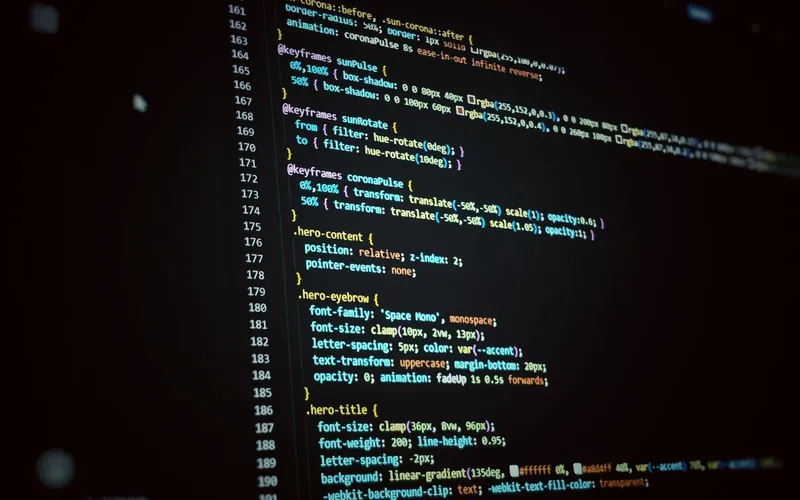
Operational Bottleneck & Root Cause
Every production deployment required two manual QA testers spending six hours testing checkout permutations, and checkout bugs still slipped through, costing $80K/month.
Root Cause: Hundreds of product variant combinations, dynamic coupon discount rules, and international tax variations that were impossible to test manually within release windows.
Engineered Architecture
Engineered an automated Playwright regression suite testing 240 distinct checkout permutations across desktop and mobile Safari/Chrome in 7 minutes on CI.
Measured Result
Eliminated six hours of manual pre-release testing; zero checkout regression bugs in production over 12 months; recovered an estimated $900K in lost revenue.
Operational Bottleneck & Root Cause
The engineering team could only release software once a month because manual regression testing was so agonizing, causing customers to complain about slow feature delivery.
Root Cause: Over 50,000 lines of legacy code with zero automated tests; developers were terrified of modifying code because minor edits frequently broke unrelated dispatch modules.
Engineered Architecture
Built a comprehensive pyramid testing framework: 400 unit tests for core algorithms, 120 API contract tests, and 35 Playwright E2E browser journeys on GitHub Actions.
Measured Result
Release frequency accelerated from monthly to daily; customer bug reports dropped by 88%; developer deployment anxiety eliminated entirely.
Operational Bottleneck & Root Cause
The platform suffered a catastrophic 45-minute outage during market open after a major product launch, because the backend crashed under 8,000 concurrent user logins.
Root Cause: Database connection pool starvation caused by un-cached real-time balance calculations executing un-indexed join queries under concurrent load.
Engineered Architecture
Executed comprehensive k6 load and stress testing simulating 20,000 concurrent traders; identified bottleneck queries; added Redis caching and Aurora read replicas.
Measured Result
Platform smoothly handled subsequent market open surges with 25,000 concurrent users at 180ms p95 latency; zero connection timeouts.
Operational Bottleneck & Root Cause
The client was facing regulatory sanctions after a software update accidentally allowed unauthorized pharmacy technicians to view patient psychiatric consultation notes.
Root Cause: Lack of automated API security boundary testing; role-based access control was verified only through superficial manual UI spot-checking.
Engineered Architecture
Implemented automated API security test suites probing every endpoint with 50+ unauthorized permission matrices, asserting strict HTTP 403 Forbidden responses.
Measured Result
One hundred percent automated verification of RBAC boundaries; passed external state medical board security audit; zero unauthorized data access incidents.
Sprint Delivery Cadence
Phased Sprint Roadmap & Quality Gates
Predictable milestone delivery with working software demoed every week in your repository.
Phase 01: QA Audit, Test Strategy & Critical Journey Mapping
Codebase analysis, regression history review, critical journey mapping, and test architecture
Deliverables:
- Comprehensive quality engineering assessment analyzing historical production bug patterns
- Critical user journey matrix mapping high-risk conversion and operational flows for automation
- Test automation architecture specification selecting tooling (Playwright/k6) and CI/CD rails
- Local test environment and synthetic test data seeding fixture implementation
Gate Criteria
Approval of test automation strategy and successful execution of first test fixture in CI.
Phase 02: End-to-End Browser Regression Automation
Playwright E2E test authoring, cross-browser validation, and trace recording
Deliverables:
- Production Playwright E2E test suite covering 100% of mapped critical user conversion journeys
- Cross-browser test execution matrix running across Chromium, Safari WebKit, and mobile viewports
- Automated trace, video, and screenshot artifact capture on CI failure for rapid debugging
- Interactive HTML test report dashboard generation integrated into pull request comments
Gate Criteria
Playwright test suite passing with 100% consistency across 20 consecutive CI test runs.
Phase 03: API Contract Testing, Load Testing & Security Gates
API integration tests, k6 load testing, database verification, and security testing
Deliverables:
- Automated API contract test suite validating REST and GraphQL endpoints against OpenAPI schemas
- Distributed k6 load testing suite simulating peak concurrent user traffic and identifying bottlenecks
- Security boundary test suite probing RBAC permissions, input sanitization, and rate limiting
- Performance tuning recommendations for database query indexing and cloud compute sizing
Gate Criteria
Application demonstrating sub-500ms p95 latency under target peak load in k6 testing.
Phase 04: CI/CD Pipeline Sharding, QA Runbook & Team Training
Pipeline optimization, sub-10-minute CI budgets, documentation, and engineering handover
Deliverables:
- Optimized CI pipeline with test sharding across parallel container runners completing in <10 minutes
- Automated flaky test quarantine mechanism isolating non-deterministic tests without blocking deploys
- Comprehensive QA operations runbook detailing how to write, maintain, and run tests
- Recorded engineering training workshop upskilling internal developers on Playwright best practices
Gate Criteria
Sub-10-minute parallel CI execution verified, complete documentation sign-off, and IP handover.
Financial Transparency
Total Cost of Ownership & Risk Mitigation
Understand the core technical variables that dictate development investment and long-term operating costs.
Automated CI/CD Test Gates vs Production Regression Revenue Loss
TCO VariablePrimary Cost Driver
A single critical checkout or billing bug escaping into production can cost tens of thousands of dollars in lost sales and customer churn within hours.
Risk Without Proper Architecture
Relying on manual testing allows critical edge-case regressions to reach customers, inflicting severe financial and reputational harm.
Our Engineering Mitigation
Our automated Playwright test suites validate critical user funnels on every pull request, catching 95%+ of regression bugs before code merges.
Parallel Automated Testing vs Expensive Manual QA Payroll
TCO VariablePrimary Cost Driver
Employing full-time manual QA testers to click through repetitive test scripts before every release costs $100K+ per year and slows release cycles.
Risk Without Proper Architecture
Organizations face an agonizing choice between hiring more manual testers or delaying software releases to keep pace with code volume.
Our Engineering Mitigation
Automated test suites execute hundreds of user journeys in under 10 minutes on inexpensive CI runners, reducing manual QA overhead by 70%.
Proactive k6 Load Testing vs Catastrophic Traffic Crash Losses
TCO VariablePrimary Cost Driver
Software platforms that crash during Black Friday sales or major marketing campaigns lose customer trust, ad spend ROI, and immediate commercial revenue.
Risk Without Proper Architecture
Companies discover scalability bottlenecks for the first time during real-world peak traffic events, causing catastrophic downtime.
Our Engineering Mitigation
We execute distributed k6 load testing to identify database deadlocks and compute limits beforehand, guaranteeing high-traffic stability.
Open-Source Testing Portability vs Proprietary SaaS Testing Lock-In
TCO VariablePrimary Cost Driver
Proprietary cloud testing platforms charge expensive recurring monthly fees and restrict test scripts to closed-source proprietary recording tools.
Risk Without Proper Architecture
Organizations become held hostage by testing vendors, unable to run tests locally or migrate CI providers without rewriting test suites.
Our Engineering Mitigation
We build on open, industry-standard frameworks (Playwright, k6, Jest) with 100% code ownership in your corporate Git repository.
Results
What This Service Delivers

Outcome 1
Automated test suites running on every pull request in CI
Automated Playwright regression suites that validate critical user funnels on every single pull request in under 10 minutes.

Outcome 2
Sub-10-minute test execution with video traces on failure
Clear, diagnostic video recordings, network waterfalls, and screenshots automatically captured whenever a test fails in CI.
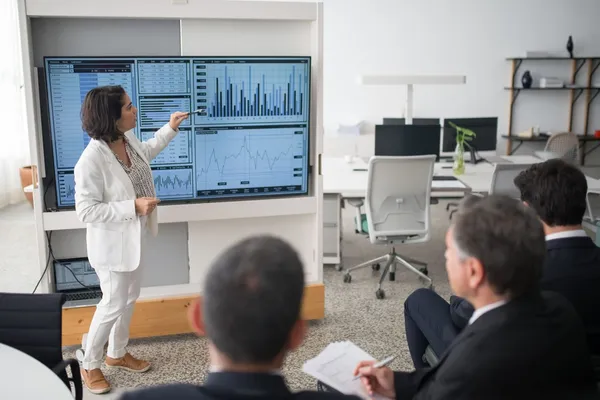
Outcome 3
Load-tested infrastructure that handles peak traffic spikes
Distributed k6 load testing validating that your cloud infrastructure handles peak traffic surges without slowing down.
Fit Check
Is This Service Right for Your Business?
When It Fits
Releases are stressful, bugs keep slipping to production, and manual testing is slowing your team down.
✕When It Doesn't
You need manual exploratory testing for a one-off mobile game — that needs a specialized gaming QA lab.
Use Cases
Business Use Cases We Serve
Bugs escaping to production
Customers discovering broken features after deploys — automated regression suites catching bugs before merge.
Painful pre-release freezes
Releases taking days of manual testing — automated browser and API tests running in minutes on every deploy.
Fear of peak traffic crashes
Major marketing campaign or sale planned — k6 load testing identifying bottlenecks before live users arrive.
Gallery
What Typical Deliverables Look Like
Sample deliverables from a typical engagement — yours follow the same shape, scoped to your business.

Visual 1
Playwright automated test run
Cross-browser regression suites running parallel in CI in under 10 minutes.
Visual 2
Trace viewer diagnostics
DOM snapshots, network waterfalls and video captured on every failure.
Visual 3
k6 load testing graph
Distributed stress testing profiling concurrency bottlenecks before launches.
Timeline
How Long Does QA testing Take?
Initial test suite typically 2–4 weeks; runs on every deploy thereafter. The same four delivery stages run every engagement — you approve progress at each gate before the next begins.
Stage 1
Journey mapping & audit
Map critical conversion funnels, payment flows and regression hotspots with engineering and product leads.
Stage 2
E2E browser automation
Author resilient Playwright tests for desktop and mobile viewports with auto-waiting and visual trace captures.
Stage 3
API & load testing
Build API contract tests and distributed k6 load tests simulating thousands of concurrent virtual users.
Stage 4
CI/CD & team handover
Integrate into GitHub Actions with parallel runners, deliver QA runbook and train your developers on maintaining tests.

Pricing
What Drives the Cost of QA testing?
- 1
Number and complexity of user journeys, form steps and checkout paths
- 2
Depth of API contract testing, data seeding and service mocking
- 3
Load testing concurrency scale and distributed testing infrastructure requirements
Pricing shape: Fixed-price test automation build based on critical journey scope; ongoing test suite maintenance optional.
Indicative ranges live on the pricing page — your fixed quote arrives with the discovery scope.
Process
Delivery Stack and Pricing
Stages shown above — here is what they run on and how they are priced.
Stack & Tools
PlaywrightCypressJest / Vitestk6 Load TestingPostman / NewmanSelenium GridSonarQubeGitHub Actions CIAllure ReportsAppiumLighthouse CIDocker
Pricing Shape
Fixed-price test automation build based on critical journey scope; ongoing test suite maintenance optional.
Due Diligence
Technical Due Diligence FAQs
How much does QA testing cost?
After a short paid discovery (typically 1–3 weeks) you receive a fixed price with milestones. Fixed-price test automation build based on critical journey scope; ongoing test suite maintenance optional. Discovery is credited toward the build if you proceed.
Why do you recommend Playwright over Cypress or Selenium for automated end-to-end testing?
While Selenium is an older legacy framework plagued by slow execution and brittle configuration, and Cypress operates inside the browser with architectural limitations regarding multiple tabs and iframe support, Playwright represents the modern pinnacle of end-to-end browser automation. Developed by Microsoft, Playwright communicates directly with browser rendering engines via Chrome DevTools Protocol and native WebKit/Firefox debugging APIs. This provides unmatched speed, native support for multi-tab workflows, frictionless iframe handling, and true cross-browser execution across Chromium, Safari WebKit, and Firefox. Crucially, Playwright features 'web-first assertions' and automatic waiting, completely eliminating arbitrary sleep timeouts and producing rock-solid, zero-flakiness automated test suites.
How do you eliminate 'flaky tests' that pass locally but fail intermittently in CI/CD pipelines?
Flaky tests are almost always caused by three architectural root causes: (1) Hardcoded timing sleeps (e.g. sleep(3000)) that fail under variable CI CPU loads; (2) Shared mutable database state where tests interfere with one another's data; and (3) Dynamic animations or asynchronous network requests completing out of order. We eliminate flakiness through rigorous engineering disciplines: we ban arbitrary sleep statements, enforcing Playwright's auto-waiting web-first assertions that automatically poll the DOM until conditions are met. We isolate test data by seeding unique synthetic fixtures for each test run, and we utilize Mock Service Worker (MSW) or deterministic API intercepts for volatile third-party services. If a test exhibits non-deterministic behavior, our CI pipeline automatically isolates it into a quarantine bucket for developer remediation.
How do you test user authentication and multi-factor authentication (MFA) without manual intervention?
Testing authenticated user journeys without manual intervention requires programmatic authentication bypass or automated token generation. We implement Playwright's storageState API: authentication is performed once during global setup, and the resulting cryptographic cookies and local storage tokens are saved to disk and injected into subsequent test contexts, bypassing repetitive login forms and accelerating test execution by over sixty percent. For multi-factor authentication (MFA), our test fixtures generate deterministic Time-based One-Time Passwords (TOTP) programmatically using standard RFC 6238 libraries and test shared secrets, allowing automated end-to-end verification of MFA flows without human interaction.
What is the difference between stress testing, load testing, and spike testing in k6?
Load testing evaluates how an application performs under expected peak operational conditions (such as simulating 1,000 concurrent virtual users during normal business peak hours) to verify that latency percentiles (p95 < 500ms) and resource utilization remain healthy. Stress testing pushes the system beyond expected capacity, progressively increasing virtual users until the application begins failing, identifying the exact breaking threshold, memory leak triggers, and database saturation points. Spike testing simulates sudden, dramatic traffic surges (such as scaling from 50 to 5,000 virtual users in 10 seconds) to evaluate how quickly auto-scaling container fleets and cloud load balancers respond, verifying that sudden viral marketing drops do not cause cascading 504 gateway failures.
How do you prevent automated test suites from taking hours to run in GitHub Actions?
Long-running test suites paralyze engineering velocity because developers must wait for builds before merging code. We enforce a strict Sub-10-Minute CI Budget for all test suites. We achieve this through parallel test sharding across multiple container runners in GitHub Actions: a suite of 200 tests is partitioned across 4 or 8 parallel workers running simultaneously in headless mode. We implement smart test change detection (using Turborepo or Nx) that executes only tests relevant to modified code modules during pull request validation, reserving full end-to-end regression suites for merges to main or scheduled nightly test runs.
How do you manage test data so that automated tests do not pollute our production database?
Automated test suites never touch live production databases. Tests execute against dedicated staging environments or ephemeral, containerized database instances spun up on-demand in Docker during CI execution. We utilize automated synthetic data factories (such as Fishery and Faker.js) that seed isolated, realistic business entities (such as unique customer records, product catalogs, and order transactions) at the start of each test. In addition, tests wrap database operations in transactional rollbacks or execute automated cleanup teardown scripts upon completion, ensuring a pristine, repeatable testing environment for every run.
Can you automate tests for third-party integrations like Stripe payments, SMS gateways, and CRM webhooks?
Yes. We implement robust testing for third-party integrations using a hybrid approach. For end-to-end staging validation, we utilize official developer sandbox test keys (such as Stripe test card numbers and Twilio test credentials), asserting that transactions process correctly without incurring real financial charges. In continuous integration environments where speed and isolation are paramount, we implement Mock Service Worker (MSW) or API mocks that simulate external responses (including success responses, card declined errors, and network timeouts), verifying that application error recovery logic operates correctly even when external vendor APIs fail.
What visual diagnostic artifacts are captured when an automated test fails in CI/CD?
When a test fails in GitHub Actions or GitLab CI, Playwright's trace recording engine captures a comprehensive diagnostic package: (1) An interactive Playwright Trace file that developers can open locally, allowing them to step forward and backward through the execution timeline, inspect DOM snapshots at every microsecond, and view network request waterfalls; (2) A full-motion MP4 video recording of the browser session; (3) Full-page high-resolution PNG screenshots captured at the moment of failure; and (4) Captured browser console logs and uncaught JavaScript exception stack traces. This enables developers to pinpoint root-cause bugs within minutes without ever needing to reproduce them manually.
Who owns the automated test scripts, load testing scenarios, and CI/CD pipelines?
Your organization maintains one hundred percent exclusive, unconditional ownership of all automated test code, test fixture scripts, k6 load testing scenarios, configuration files, and CI/CD pipeline definitions from day one. All test assets are authored directly in your corporate GitHub or GitLab repositories under standard commercial licenses. We build strictly on open-source frameworks (Playwright, k6, Vitest, Jest) with zero proprietary vendor lock-in or recurring per-test license fees. Upon project completion, full intellectual property and comprehensive QA runbooks are transferred directly into your corporate custody.
How do you train our internal development team to maintain and write new automated tests?
Building a durable automated testing culture requires empowering your in-house engineering team to independently maintain and expand test coverage. At the conclusion of every engagement, we deliver a comprehensive QA Operations Runbook detailing step-by-step guides for writing new Playwright tests, seeding data fixtures, executing tests locally, and interpreting CI failure traces. We conduct hands-on, recorded training workshops where our quality engineers pair with your developers to write new tests together. We also establish clear ESLint rules and code review checklists to ensure all future pull requests adhere to established quality engineering standards.
How long does it take to start?
Discovery starts within days of agreement. Builds run in weekly sprints with a demo every week.
Who owns the work?
You do, under a signed agreement — code, docs and accounts are handed over at the end.
Content last reviewed September 2026.
Straight Talk
Mistakes We Prevent & How We Compare
Common mistakes we prevent
Relying on manual testing for repetitive regression verification
Writing brittle tests with arbitrary sleep timeouts instead of web-first auto-waiting assertions
Skipping load testing and discovering infrastructure bottlenecks during live customer sales surges
Us vs the usual alternative
Speed
AnyPlace: Sub-10-minute automated parallel tests
Typical alternative: Days of manual testing freezes
Reliability
AnyPlace: Web-first assertions, zero flakiness
Typical alternative: Brittle tests that fail randomly
Diagnostics
AnyPlace: Automated video & trace recordings
Typical alternative: Vague bug reports nobody can reproduce
Before
The starting point we usually find
Releases delayed days for manual testing; developers terrified of breaking things; critical bugs slip into production.
After
Where this service leaves you
Automated tests run in minutes on every PR; releases deploy calmly multiple times daily; zero regression surprises.
Worth knowing: IBM Systems Sciences Institute data shows that finding and fixing bugs in production costs up to 15 times more than catching them during automated testing — shift-left testing preserves capital. Source: IBM Systems Sciences Institute · Verified September 2026
Related Services
Pairs Well With
Custom Software Development
Web platforms, business tools and APIs — planned in milestones, built in weekly sprints, handed over with docs and tests.
View service→

Business Website Development
Fast Next.js business sites with CMS editing — pages, blog, contact flows and analytics done right.
View service→

Cloud Setup & DevOps
Cloud hosting setup, CI/CD pipelines and cost hygiene on AWS, Azure or GCP — with runbooks your team can follow.
View service→
TELL US ABOUT YOUR PROJECT
Tell Us What to Build, Fix or Modernize
Send a short brief. We reply within 12 hours with clarifying questions and a discovery quote — no retainers, no spam.
What Happens Next
Request a Discovery Quote
Share your goals and timeline. NDA signed first if needed.
12-hour response